Underground Utility Coordination Improved Before Excavation
Excavation is one of the riskiest stages of any infrastructure or building project, largely because of what cannot be seen. Underground water mains, power cables and telecom ducts often lie close to planned routes, and their exact positions are not always well recorded. Improving the coordination of these utilities before digging starts protects networks, workers and the project schedule.
Building a Reliable Picture of Existing Utilities
The first step is to gather and verify information about what already exists below ground.
- Collecting utility records and drawings from network operators and previous projects.
- Reviewing survey data and site observations, such as manholes, valves and markers.
- Using detection methods and trial pits to confirm locations and depths where records are uncertain.
- Compiling the findings into a combined utility drawing for the project area.
Aligning Networks with Project Routes
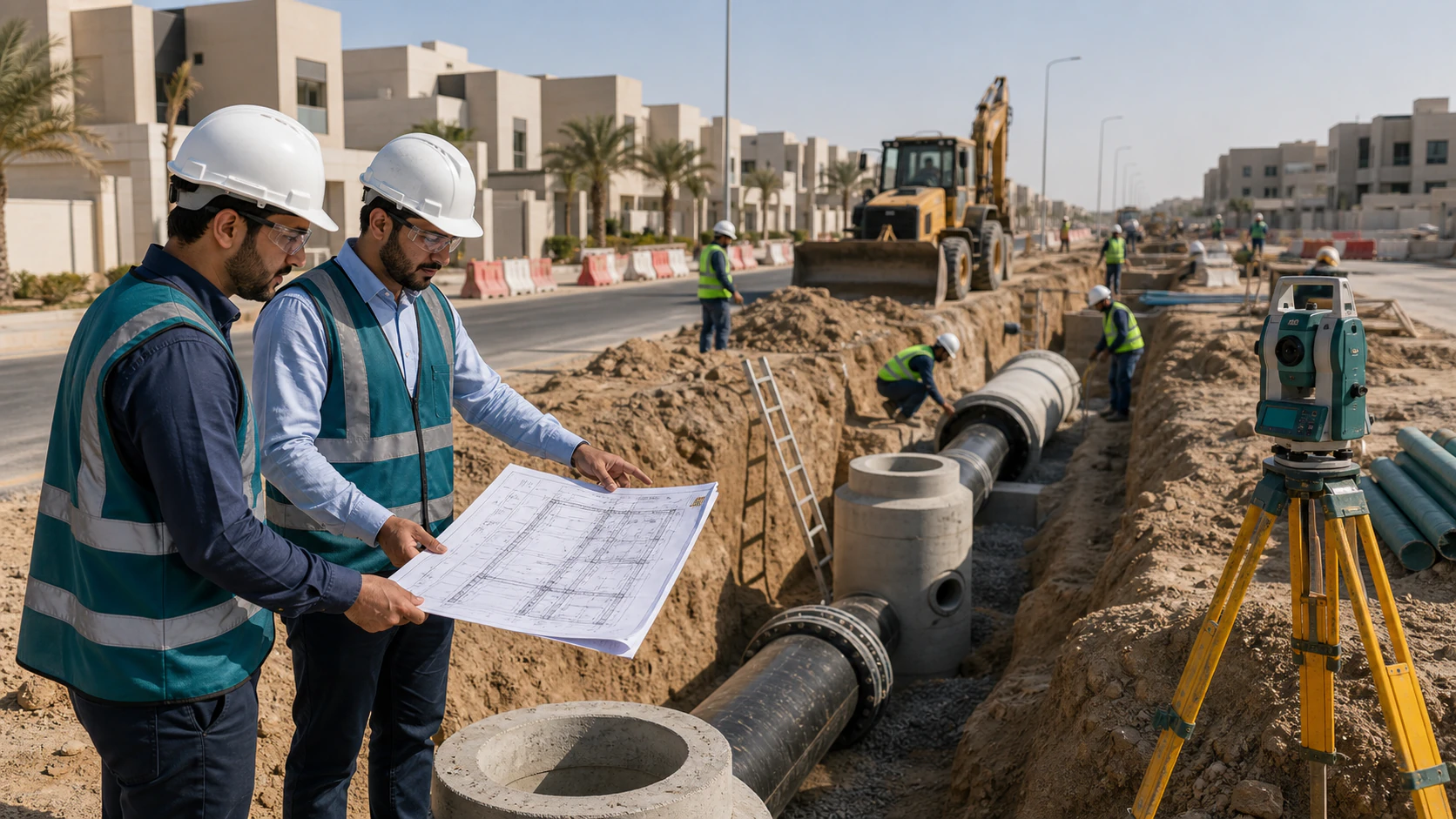
With a clearer picture of existing utilities, the design team can check how new works interact with them. New pipelines, cables, foundations or road works are compared with existing networks to identify crossings, clashes and areas where minimum separations cannot be met.
Where conflicts exist, options are evaluated: adjusting the route or level of new works, protecting existing services in place, or relocating utilities in coordination with their operators. Coordinated drawings then show agreed positions and depths for both existing and new networks, giving contractors clear guidance.
Coordinating with Operators and Site Teams
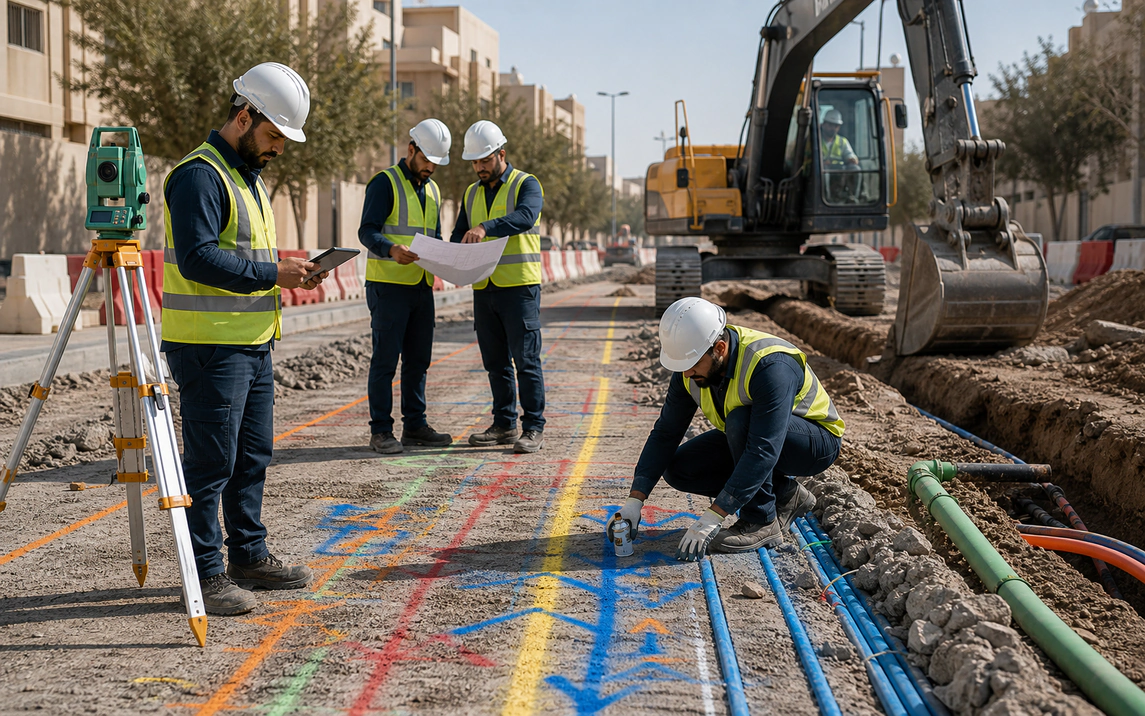
Utility operators may need to approve works near their networks and may set conditions for protection, supervision or relocation. Engaging them early and following up approvals helps avoid delays. On site, the coordinated information is translated into practical measures: marking utility routes, defining hand-digging zones and briefing excavation crews.
As works proceed, any newly discovered or relocated utilities should be recorded accurately. Updated as-built records benefit future maintenance and any later projects in the same area.
Good coordination reduces the risk of service interruptions to the community, avoids costly repairs and claims, and keeps excavation moving safely and efficiently.
VARIO (Al-Mukhtalef) supports infrastructure projects with underground utility coordination before excavation, aligning water, electricity and telecom networks with project routes to protect existing services and keep works on schedule.