Temporary Road Closure Plan During Infrastructure Works
Extending water, drainage, power or telecom networks in an existing neighborhood almost always affects the roads above them. Without careful planning, a trench can turn a quiet street into a source of congestion, confusion and risk. A temporary road closure plan sets out how traffic, pedestrians and site works will coexist safely for the duration of the infrastructure works.
Core Elements of a Temporary Closure Plan
A clear closure plan answers practical questions before work begins: which sections close, for how long, and how road users will get around them.
- Detour routes: alternative paths for vehicles that are suitable for the expected traffic and do not simply push congestion into narrow residential streets.
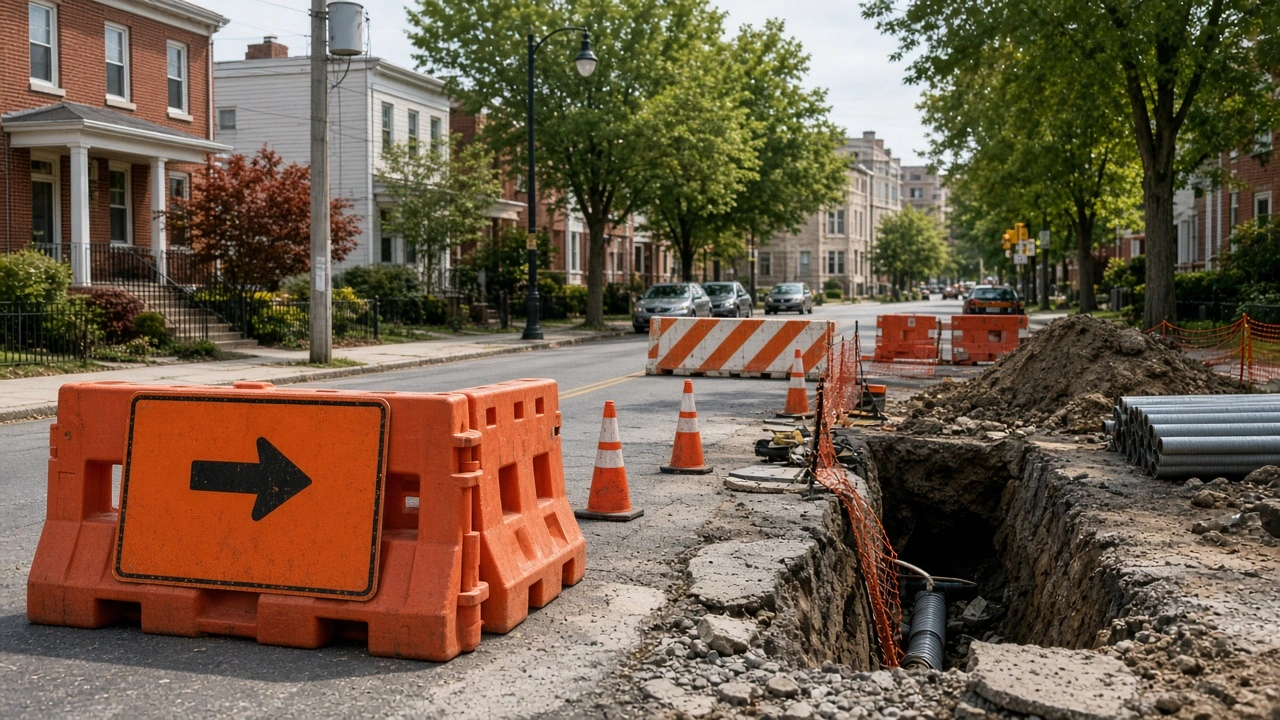
- Guidance signage: advance warning signs, direction signs and closure markers placed early enough for drivers to adjust their route.
- Traffic coordination: phasing the closures in step with utility works so that only the necessary sections are closed at any time.
- Pedestrian provision: safe, clearly separated walkways around the work zone, with attention to school routes, mosques and shop frontages.
- Barriers and lighting: physical separation and night visibility around excavations and equipment.
Coordinating Closures with Network Installation
The best closure plans are built around the construction sequence. When the utility installation program is known, closures can be staged section by section, and roads can be reinstated progressively instead of remaining closed for the full duration. Access for residents, emergency vehicles and deliveries should be maintained wherever possible, and any temporary loss of access should be communicated in advance.
The plan must also remain practical on site. Supervisors should check daily that signs remain in place, barriers are intact and detours are working as intended, adjusting arrangements when traffic patterns differ from expectations.
Safety and Reduced Disruption as Shared Goals
A temporary road closure plan protects workers inside the site and the public outside it. It reduces the chance of vehicles entering work zones, keeps pedestrians away from excavations, and gives neighborhoods predictable conditions during the works.
Within its infrastructure services, VARIO (Al-Mukhtalef) helps coordinate closure planning with network design and construction sequencing, and supports approvals with the relevant authorities, so that infrastructure projects progress safely with minimum disruption to residents and businesses.