Designing Stormwater Drainage for Low-Gradient Sites
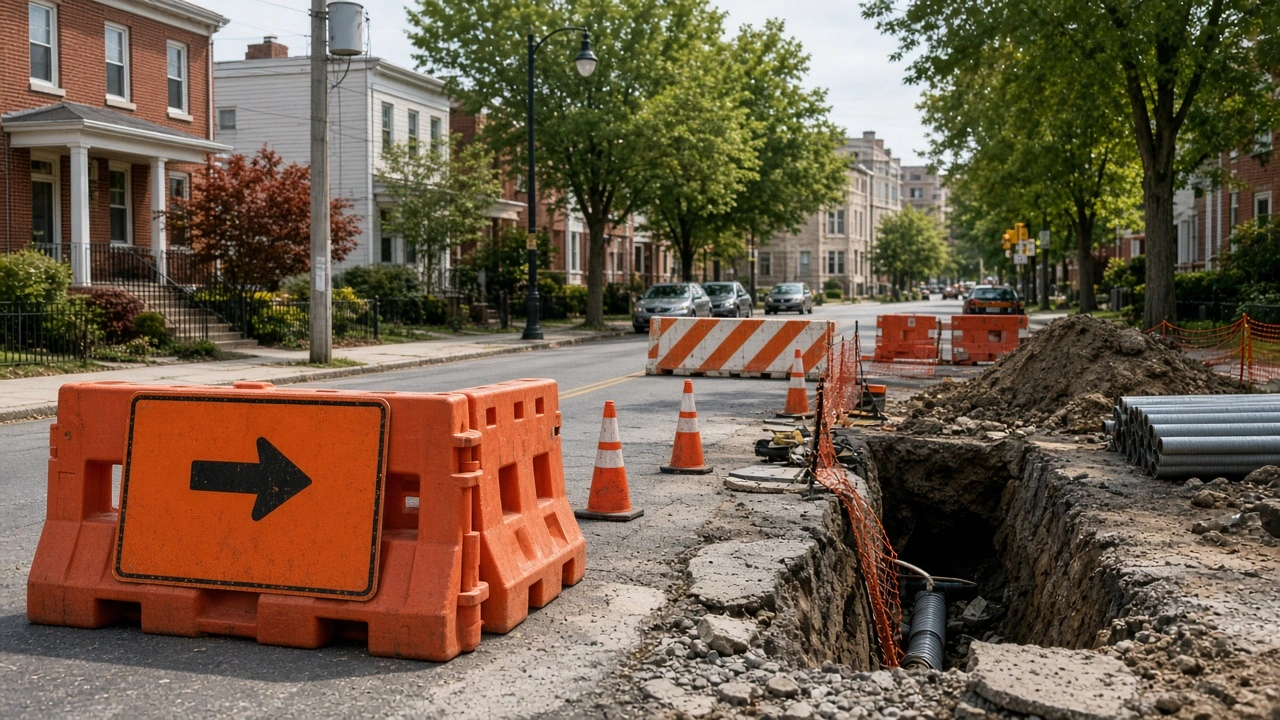
Flat sites are common in many urban areas, and they bring a particular challenge when it rains. With little natural fall, water does not drain away by itself; it collects in low points, floods roads and can find its way into basements and ground floors. Designing stormwater drainage for low-gradient sites requires careful attention to levels, collection points and network capacity.
Grading Levels to Guide the Water
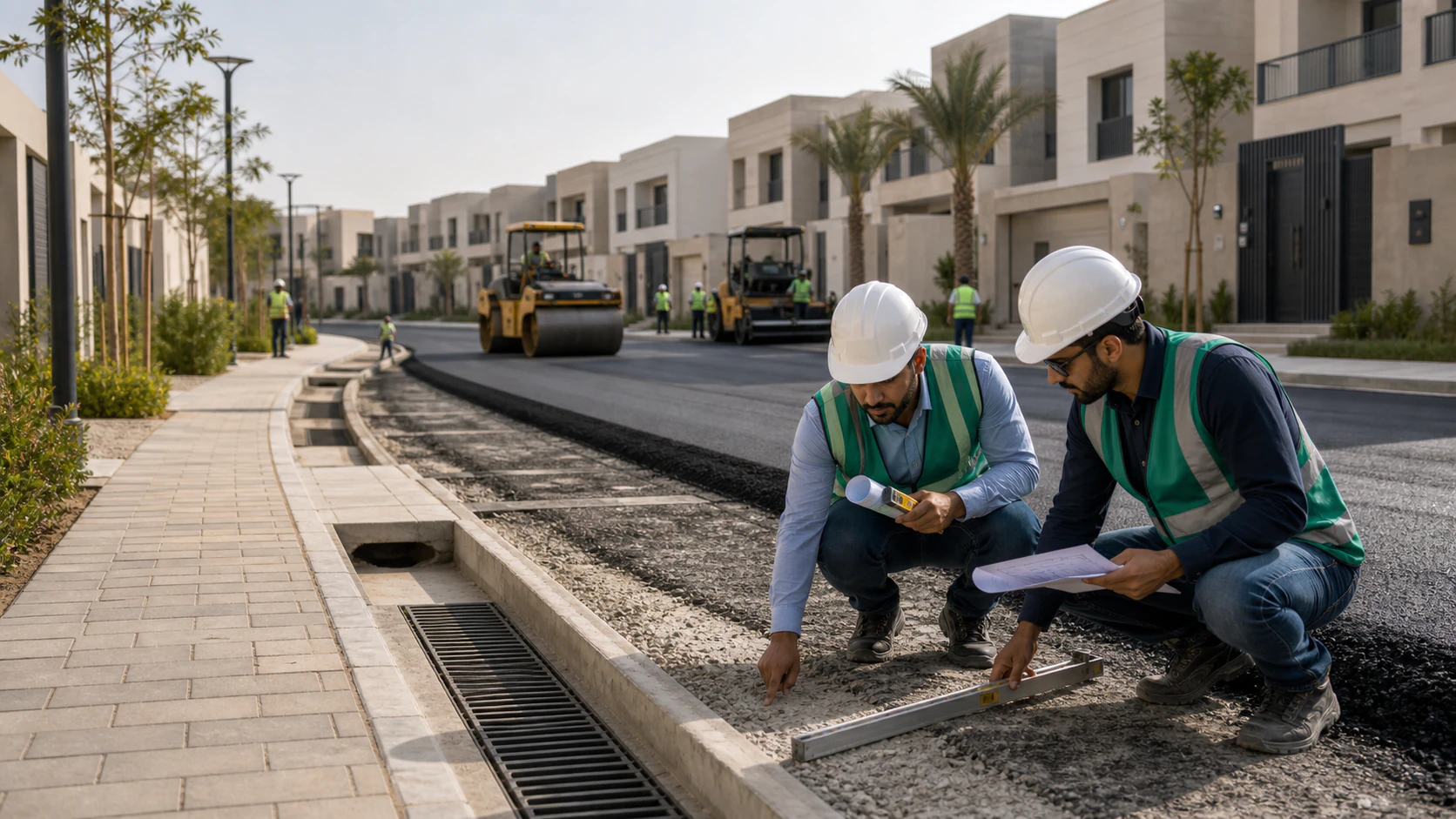
On a flat site, the drainage design starts with the surface. Engineers set finished levels for roads, pavements, landscaped areas and building surroundings so that water is directed toward collection points, even where the available slopes are small.
- Defining high and low points so that every area has a clear path toward an inlet.
- Using road cambers, channels and kerb lines to concentrate and guide flow.
- Keeping building thresholds and entrances above surrounding levels to protect interiors.
- Coordinating levels with existing roads and neighboring plots at the site boundary.
Locating Manholes and Inlets
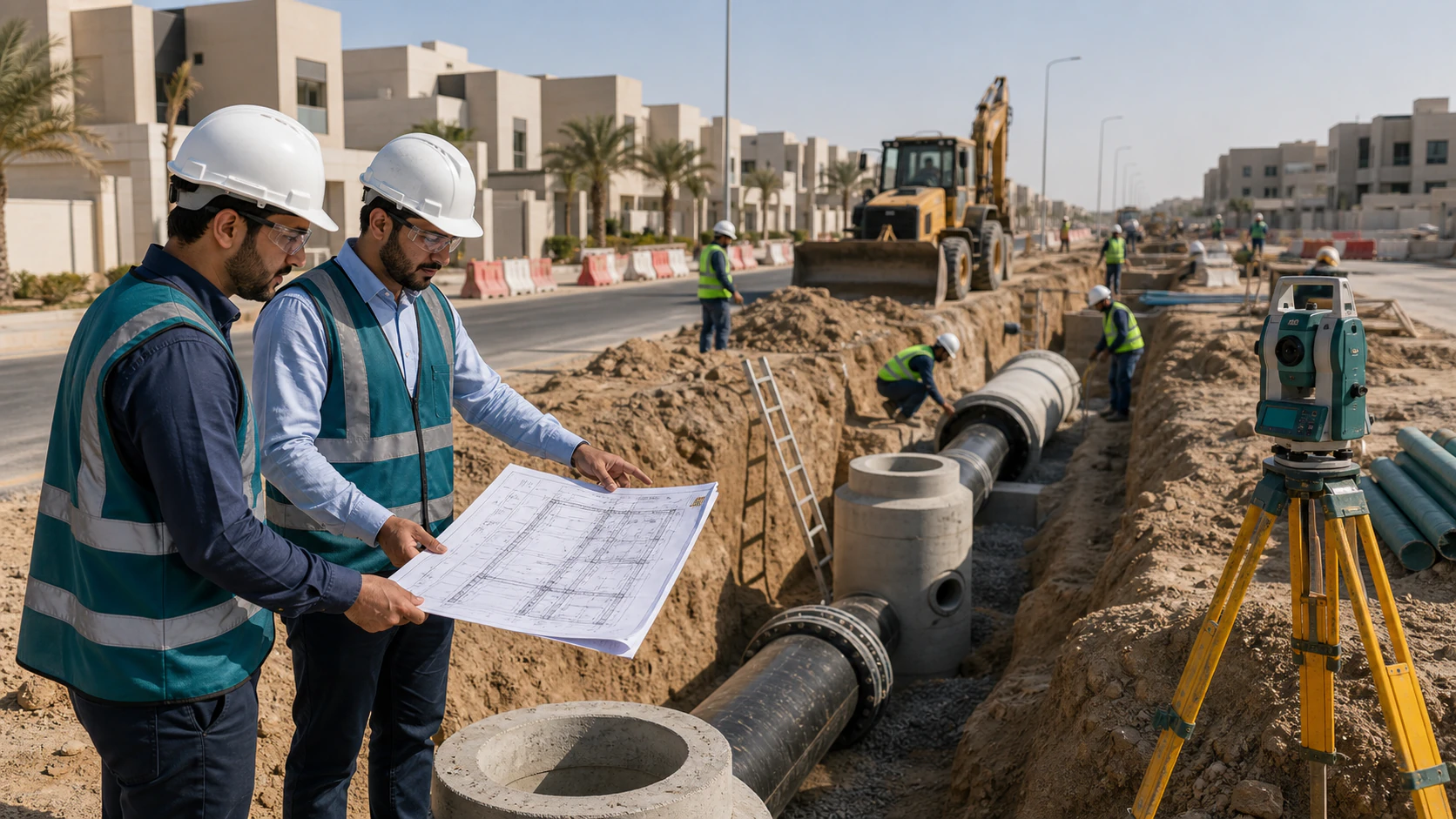
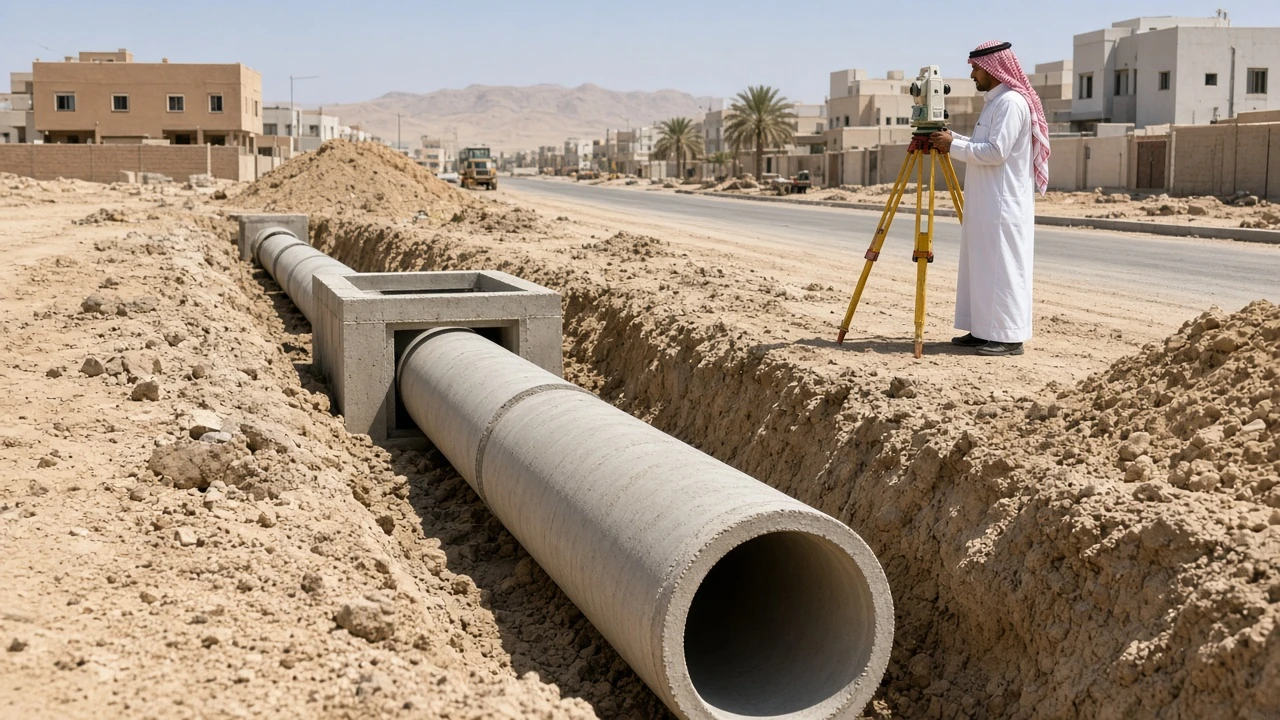
Once surface levels are set, the location and spacing of inlets determine how quickly water leaves the surface. On low-gradient sites, inlets are often needed at closer spacing, and their positions must match the low points created by the grading design. Manholes are placed to allow inspection and maintenance of the network and at changes in pipe direction, size or level.
Sizing Pipes for Storm Capacity
The underground network must be able to carry the expected runoff without surcharging. Pipe sizes and slopes are selected based on the catchment areas, surface types and design rainfall criteria adopted for the project. On flat sites, achieving self-cleansing velocities with limited fall is an important consideration, as is the connection to the receiving public network or an approved discharge point. Where outfall capacity is limited, measures such as storage or controlled discharge may be considered.
Good drainage design also accounts for maintenance. Accessible manholes, inlets that resist blockage and clear operating guidance help the system perform as intended over time.
VARIO (Al-Mukhtalef) provides infrastructure design that integrates site grading, inlet and manhole layout and pipe sizing, helping protect roads and buildings on low-gradient sites from ponding and storm damage.