Engineering Solutions for Internal Roads in Residential Compounds
Internal roads are the everyday arteries of a residential compound. Residents drive, walk, cycle and play along them, and they carry the utilities that serve every home. Designing these roads well requires attention to much more than pavement thickness; drainage, safety, pedestrian comfort and underground services all need to be integrated.
Drainage as a Design Priority
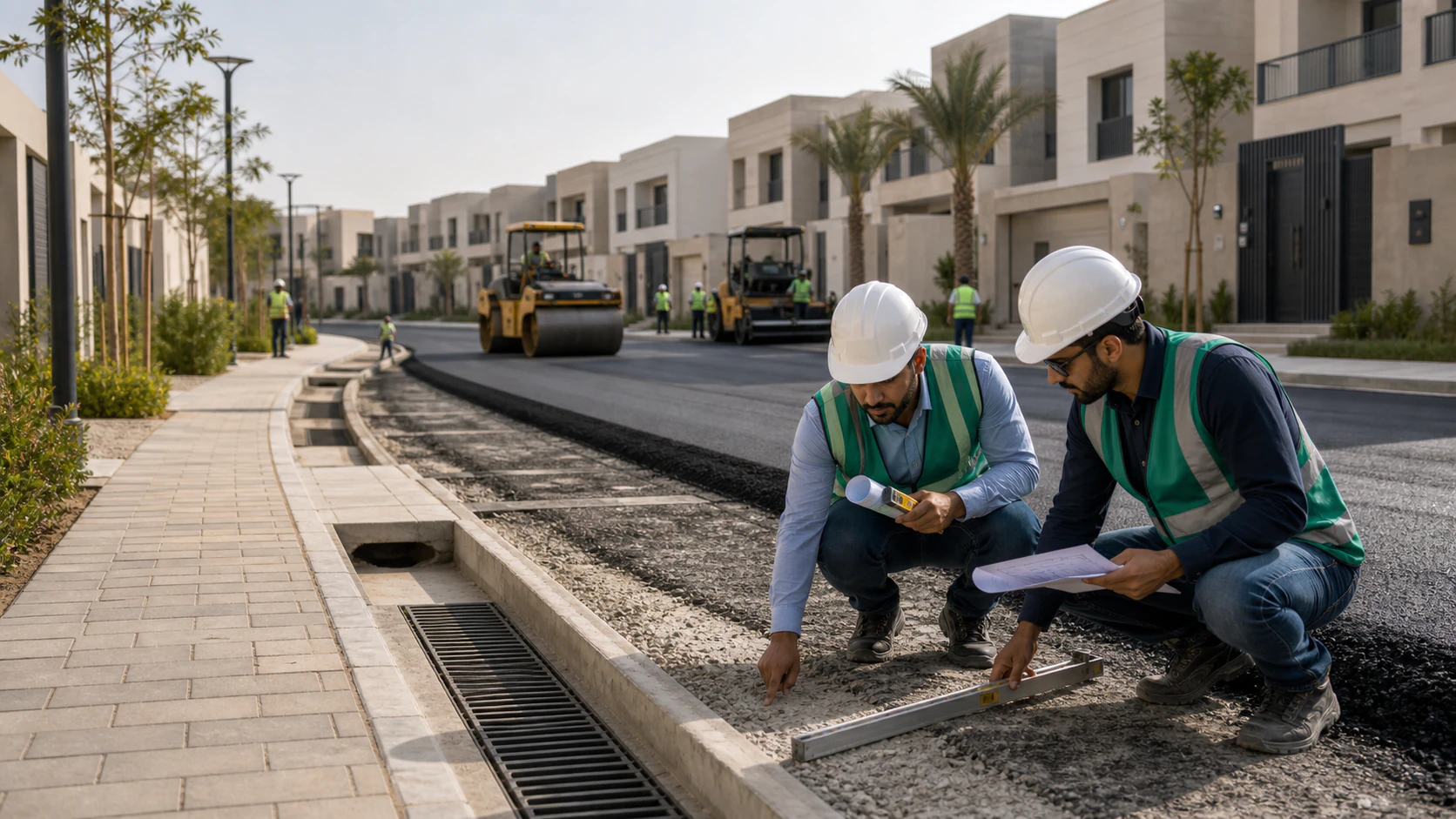
Water on roads damages pavements, creates hazards and can enter properties. Road design in residential compounds therefore treats drainage as a priority from the outset.
- Longitudinal and cross slopes that direct water toward collection points.
- Gullies or inlets positioned at low points and at suitable spacing.
- Connection to the compound's stormwater network or an approved discharge point.
- Levels coordinated with plot entrances so that water does not flow toward homes.
Traffic Safety in a Residential Setting
Internal roads should prioritize safety over speed. Road widths, alignments and junction layouts can encourage slow driving and good visibility. Traffic calming measures such as raised crossings, changes in surface or narrowing at key points help keep speeds appropriate for areas where children and pedestrians are present. Signage, road markings and lighting complete the safety system, especially at junctions and crossings.
Sidewalks and Underground Utilities
Sidewalks provide safe, continuous routes for pedestrians and should be wide enough for comfortable use, with ramps at crossings for prams and wheelchairs. Trees and shading along sidewalks improve comfort in hot weather, provided they are coordinated with utilities below.
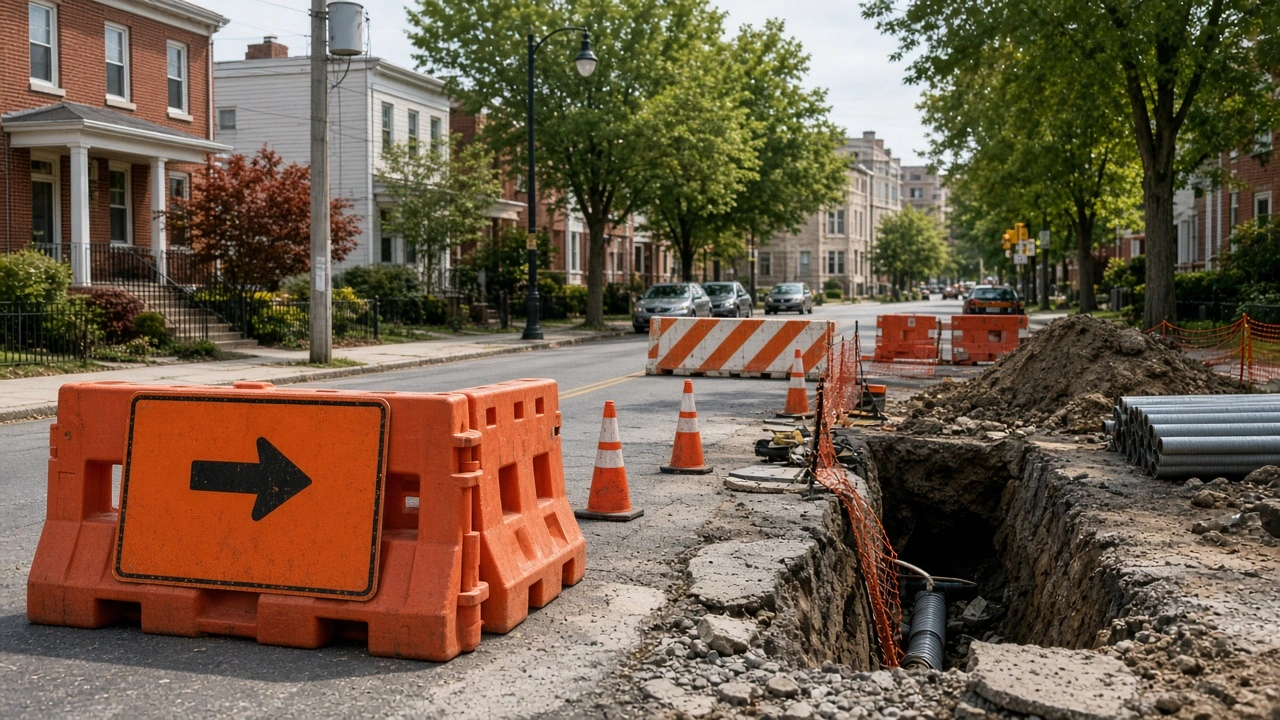
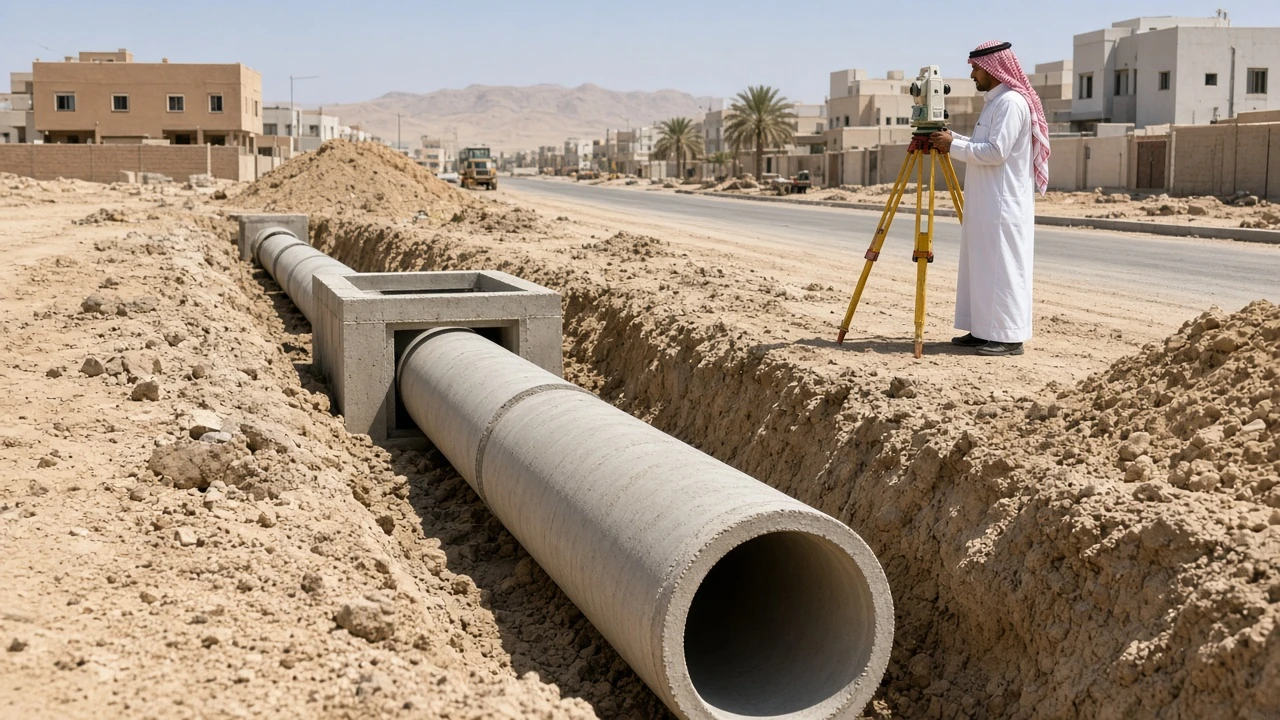
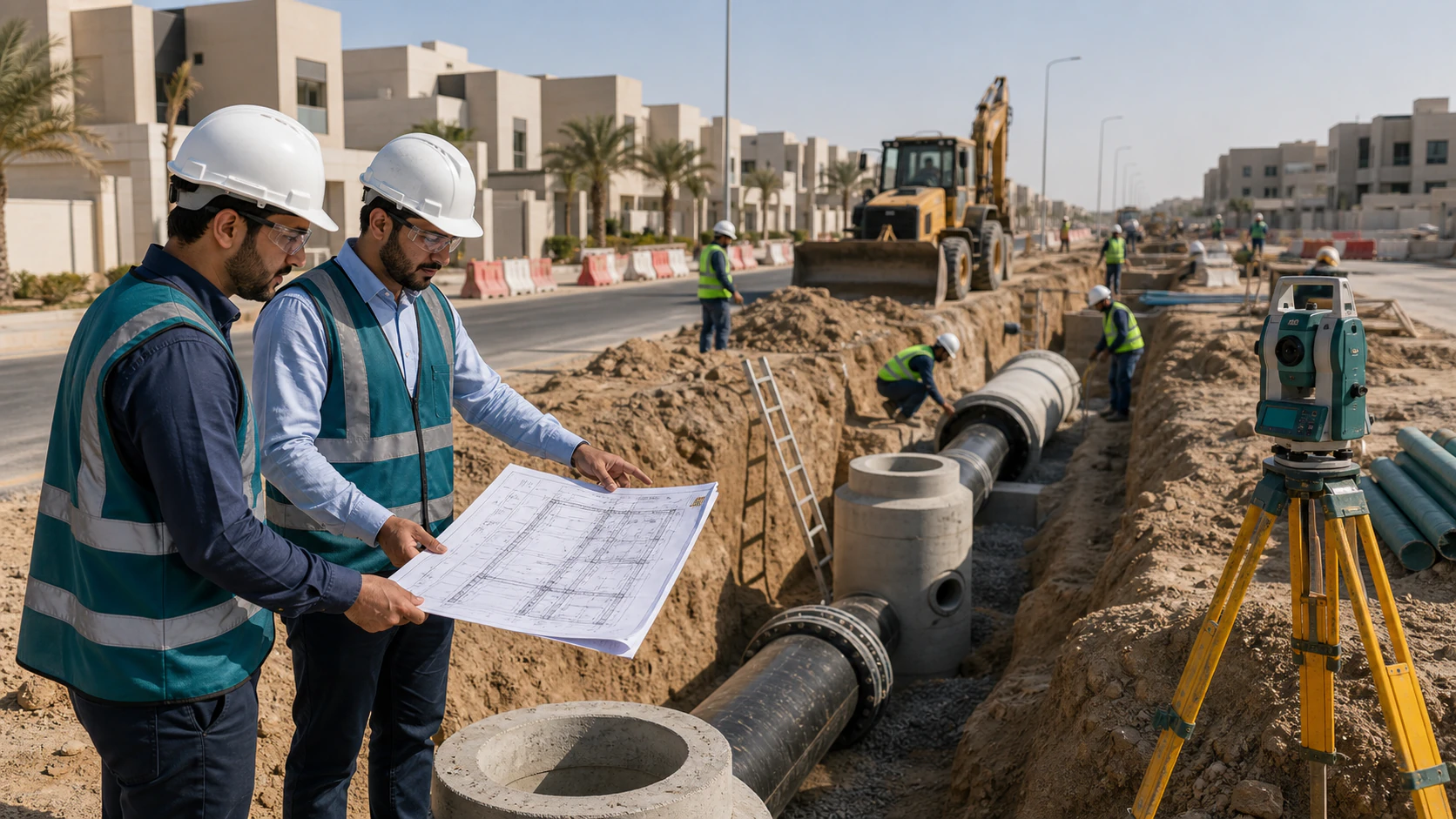
Most compound utilities, including water, sewerage, electricity, telecom and irrigation, run beneath roads and sidewalks. Coordinating their positions and depths in a common services layout prevents clashes during construction and simplifies future maintenance. Crossings under roads should be planned so that later repairs do not require repeated excavation of the pavement.
Pavement design itself, including layer thicknesses and materials, should suit expected traffic, including service and delivery vehicles, to provide a durable surface with low maintenance.
Laying spare ducts or sleeves beneath roads before paving is a simple measure that allows future services to be added without breaking up the surface, and involving the landscape team in road design helps create a coherent streetscape.
VARIO (Al-Mukhtalef) provides infrastructure design for internal roads in residential compounds, integrating drainage, traffic safety, sidewalks and underground utility coordination to deliver safe, durable and well-serviced communities.