Technical Treatment for Surface Cracks in an Existing Building
Cracks are among the most common concerns raised by owners of existing buildings. Some are harmless and cosmetic, while others signal underlying problems that need attention. Treating cracks effectively requires understanding why they appeared, rather than simply filling them and hoping they do not return. A structured approach also allows repairs to be carried out while the building remains in use.
Studying the Causes First
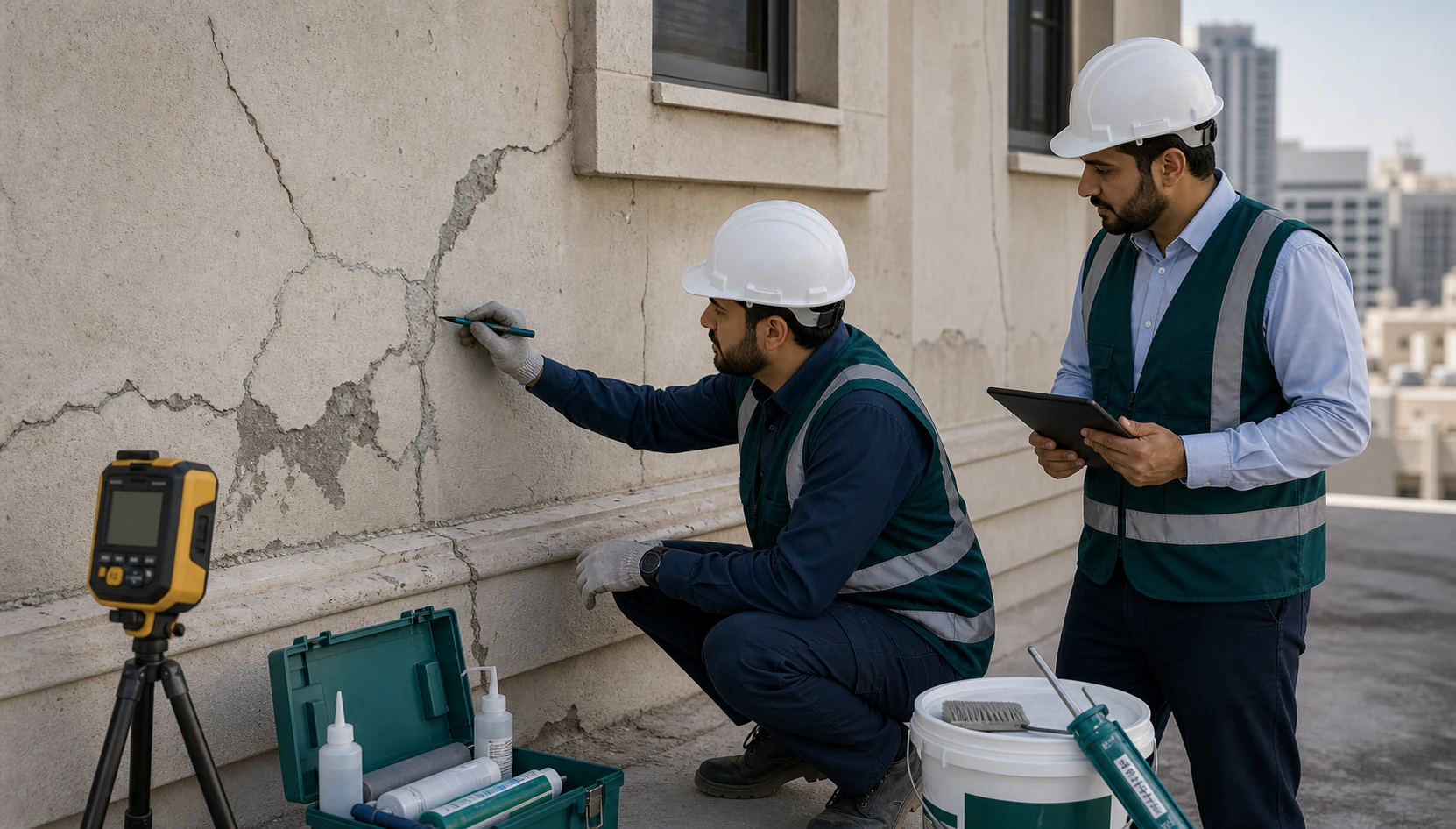
Surface cracks can result from many different mechanisms, and each calls for a different response. A technical assessment examines the pattern, width, location and activity of cracks to identify their likely cause.
- Shrinkage of plaster or concrete during drying, often producing fine, random cracks.
- Thermal movement, particularly on exposed walls and roofs subject to strong temperature changes.
- Differences in movement between materials, such as at junctions between concrete frames and block walls.
- Moisture-related causes, including water leakage and corrosion of reinforcement.
- Structural or foundation movement, which typically produces more defined patterns and requires deeper investigation.
Monitoring cracks over time helps determine whether they are still moving. Where there is any doubt about structural significance, a structural engineer should evaluate the condition before repairs are specified.
Choosing Suitable Repair Solutions
Once the cause is understood, the repair can be matched to it. Dormant cosmetic cracks may be treated with appropriate fillers and refinishing. Active cracks may need flexible sealants or movement joints so they do not reappear. Where moisture is involved, the source of water must be stopped first. Cracks associated with reinforcement corrosion require removal of damaged concrete, treatment of the steel and reinstatement with suitable repair materials. Structural causes may call for strengthening rather than surface treatment.
Repairing Without Disrupting Operation
In occupied buildings, the repair plan should minimize inconvenience. Works can be phased by area, scheduled outside peak hours and carried out with dust and noise control. Safe access, protection of finishes and furniture, and clear communication with occupants all help repairs proceed smoothly.
After repairs, follow-up inspections confirm that the treatment has been effective and the cracks have not returned.
VARIO (Al-Mukhtalef) provides technical treatment of surface cracks in existing buildings as part of its restoration and rehabilitation services, studying causes first and selecting repair solutions that keep the building operating.