Old Administrative Building Rehabilitated with Energy Efficiency Standards
Many cities have a stock of administrative buildings that are structurally sound but outdated in performance. Their insulation is weak, their MEP systems are inefficient and nearing the end of their life, and some structural elements show signs of ageing. Rehabilitation to energy efficiency standards offers an alternative to demolition, extending the useful life of these buildings while reducing operating costs.
Improving the Building Envelope
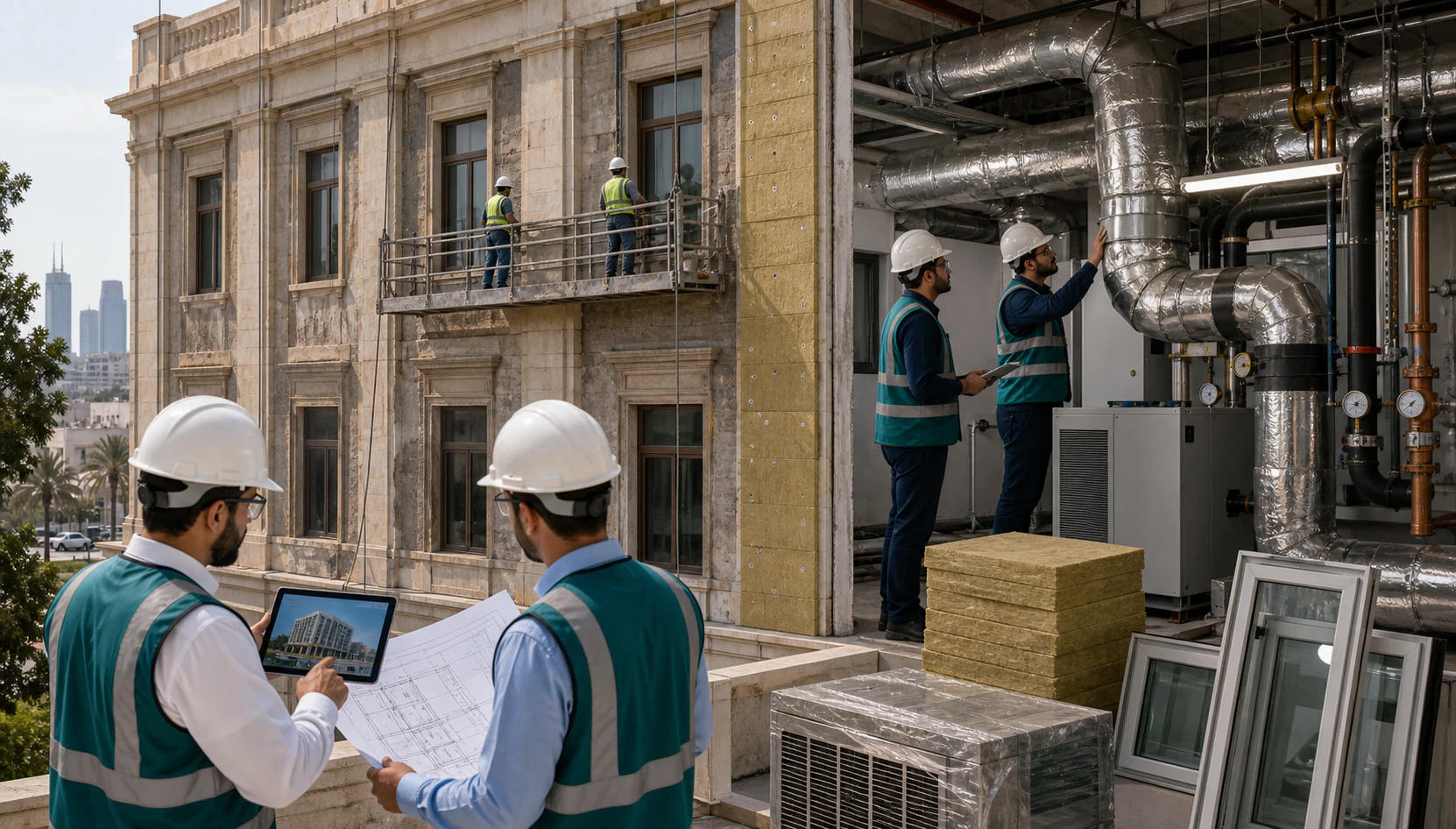
The envelope is usually the first area to address. Older buildings often lose and gain heat through walls, roofs and windows, increasing cooling demand.
- Adding or upgrading roof insulation, which is often the most cost-effective measure in hot climates.
- Improving wall insulation through internal or external systems, depending on the building and its facade.
- Replacing single glazing or poorly performing windows with more efficient units.
- Adding shading to reduce solar gain on exposed elevations.
Updating MEP Systems
Old HVAC, electrical and plumbing systems tend to consume more energy and require more maintenance. Rehabilitation provides an opportunity to replace them with efficient, modern equipment, sized for the building's current use and improved envelope. Typical measures include efficient cooling systems with better controls, LED lighting with occupancy-based control, upgraded electrical distribution and water-efficient fixtures.
Because the improved envelope reduces loads, new systems can often be smaller than the originals, saving both capital and operating costs.
Treating Structural Elements
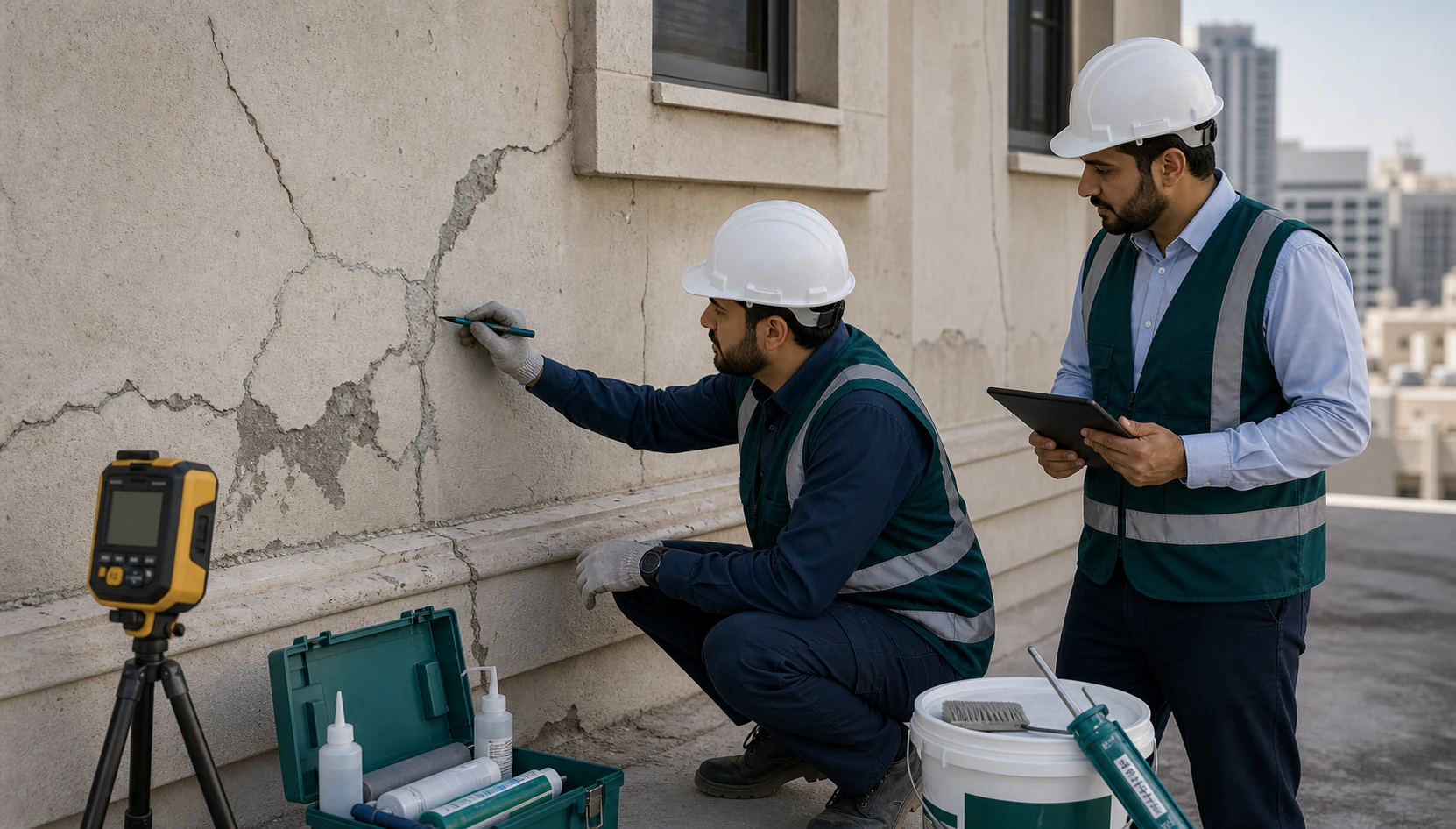
Older buildings may have structural issues such as cracking, corrosion of reinforcement or deterioration of concrete cover. A condition assessment identifies these issues and their causes, and appropriate repairs are designed, ranging from crack injection and concrete repair to strengthening where needed. Addressing these issues as part of rehabilitation protects the investment in other improvements.
Rehabilitation projects require careful sequencing, especially if the building remains partially occupied. Planning works in phases, managing dust and noise, and coordinating temporary services help minimize disruption.
The result is a building with lower energy consumption, improved comfort and a longer operational life.
Measuring energy use before and after rehabilitation helps confirm the savings achieved and guides any further improvements.
VARIO (Al-Mukhtalef) provides restoration and rehabilitation services for existing buildings, combining envelope improvements, MEP upgrades and structural repairs to bring older administrative buildings up to modern energy efficiency standards.