CCTV Inspection of Sewer Lines Before Network Handover
Why Inspect Before Handover
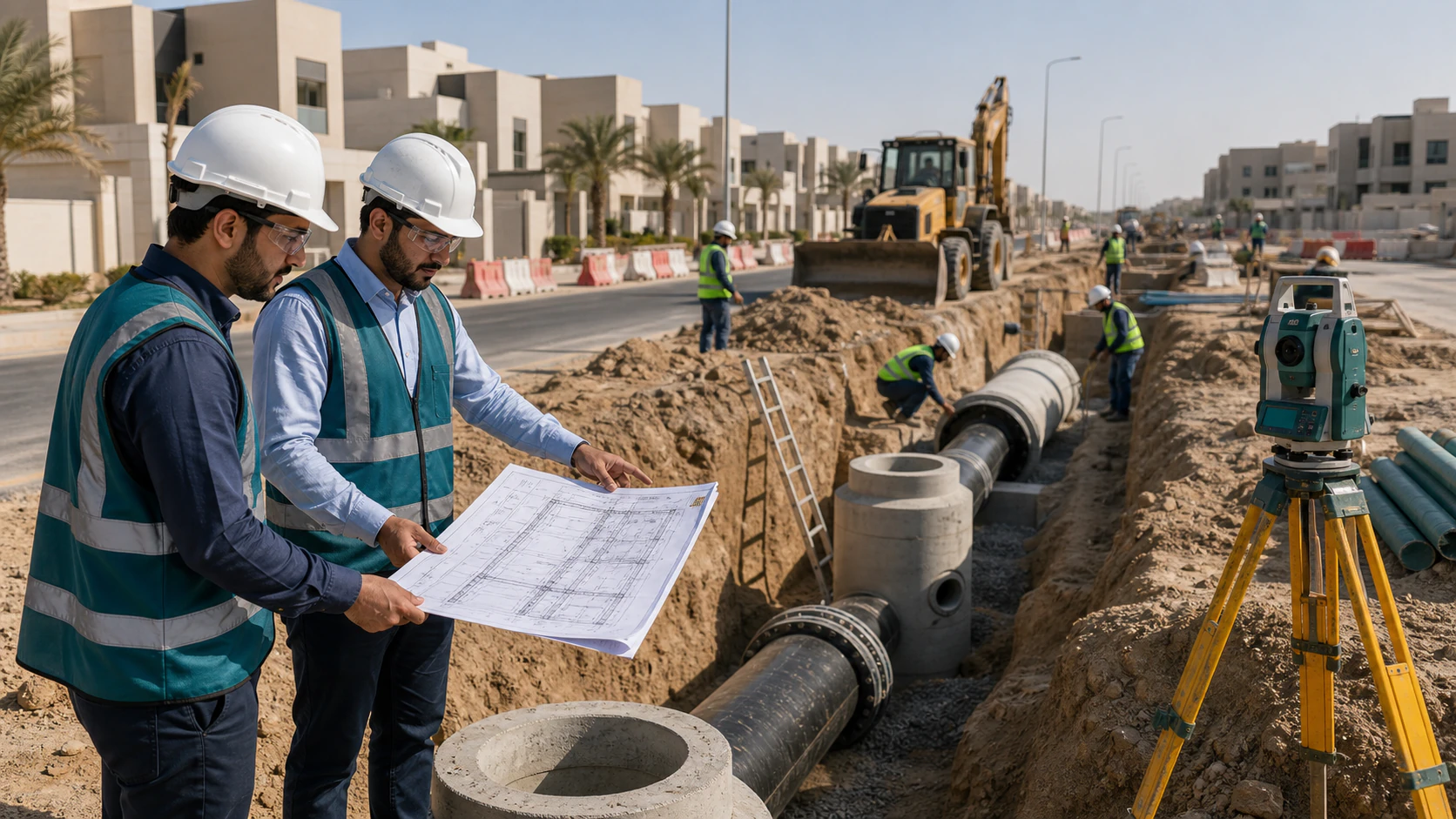
Once a sewer network is buried under finished roads, any hidden defect becomes expensive and disruptive to fix. A visual check at manholes cannot reveal what is happening along the pipe between them. Closed-circuit television (CCTV) inspection solves this by sending a camera through each line to record its internal condition before the network is handed over and commissioned. It gives the owner and the supervising engineer objective evidence that the pipes were laid, jointed, and backfilled correctly, and it allows defects to be repaired while the street is still open and the contractor is still mobilized on site.
What the Camera Reveals
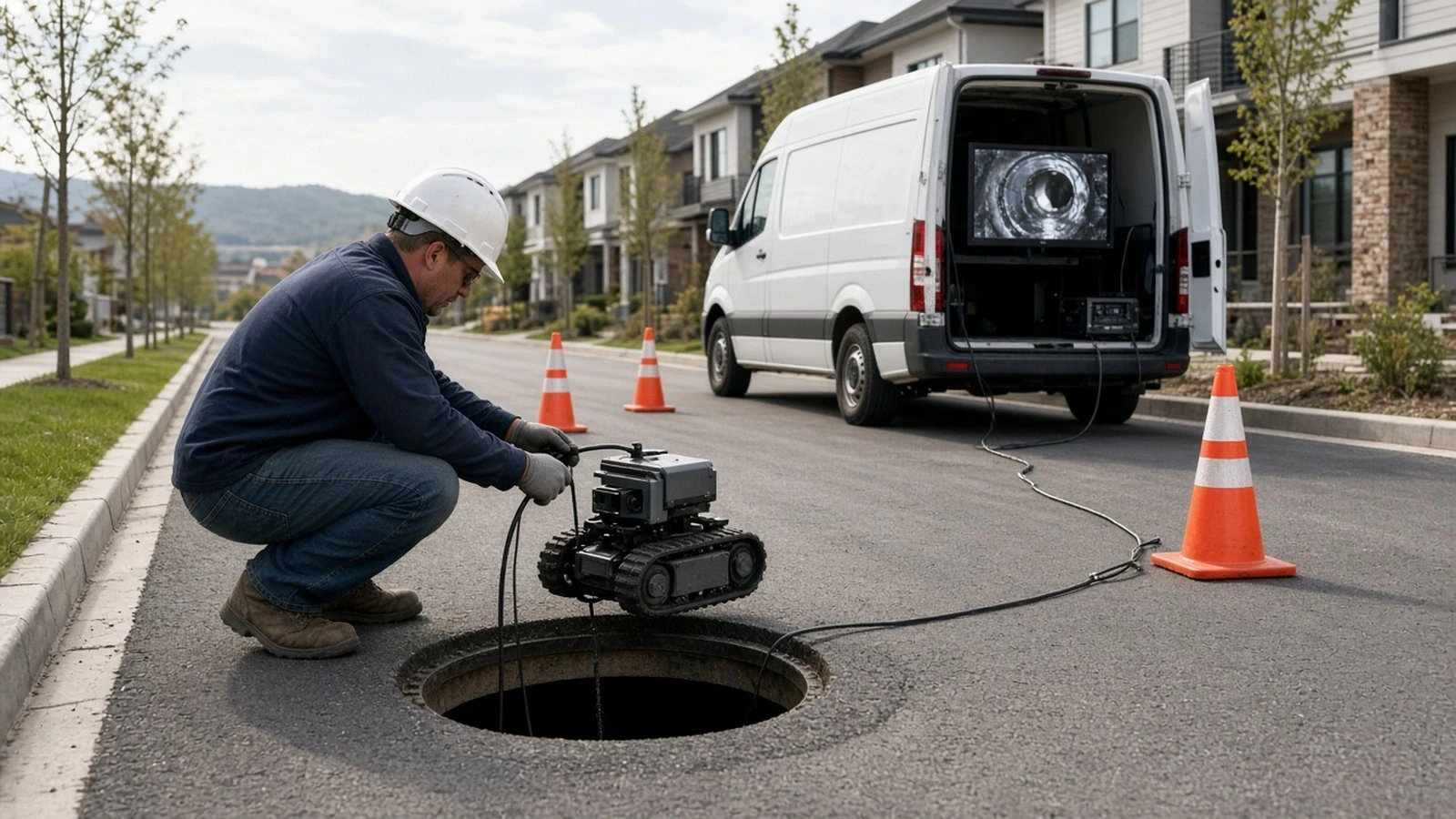
A remotely operated crawler or push camera travels from manhole to manhole, recording continuous video and tracking the distance from the starting point. The operator pauses at features of interest, and each observation is coded and logged at its exact position. Typical findings include:
- Blockages from construction debris, concrete, or soil left inside the pipe.
- Sags or dips where poor bedding has allowed the pipe to settle, causing water to pond.
- Cracked, deformed, or broken pipe sections caused by loading or improper compaction.
- Displaced, open, or poorly sealed joints that can lead to infiltration or leakage.
- Incorrect lateral connections that protrude into the main line.
Lines are normally cleaned before the survey so that the camera has a clear view of the pipe wall.
From Video Report to Repair and Commissioning
The inspection produces a video record and a written report that identifies each line by its manhole references, classifies every defect, and locates it by distance along the pipe. This allows the contractor to excavate precisely where repairs are needed instead of opening long sections of road. The supervising engineer reviews the findings against the project specification, instructs the required corrective works, and requests a re-inspection of repaired lines to confirm they are acceptable. Only when the survey shows clean, properly aligned pipes with sound joints should the streets be fully backfilled and resurfaced and the network commissioned. Keeping the final CCTV records with the as-built drawings also gives the operator a valuable baseline for future maintenance inspections throughout the network's service life.