Soil Risk Analysis Supports Foundation Type Selection
Every building ultimately rests on the ground beneath it. However well a structure is designed above ground, its long-term performance depends on how the foundations interact with the soil. Choosing the right foundation type therefore starts with understanding the soil, and that understanding comes from a careful analysis of the geotechnical investigation report.
What the Soil Report Tells the Designer
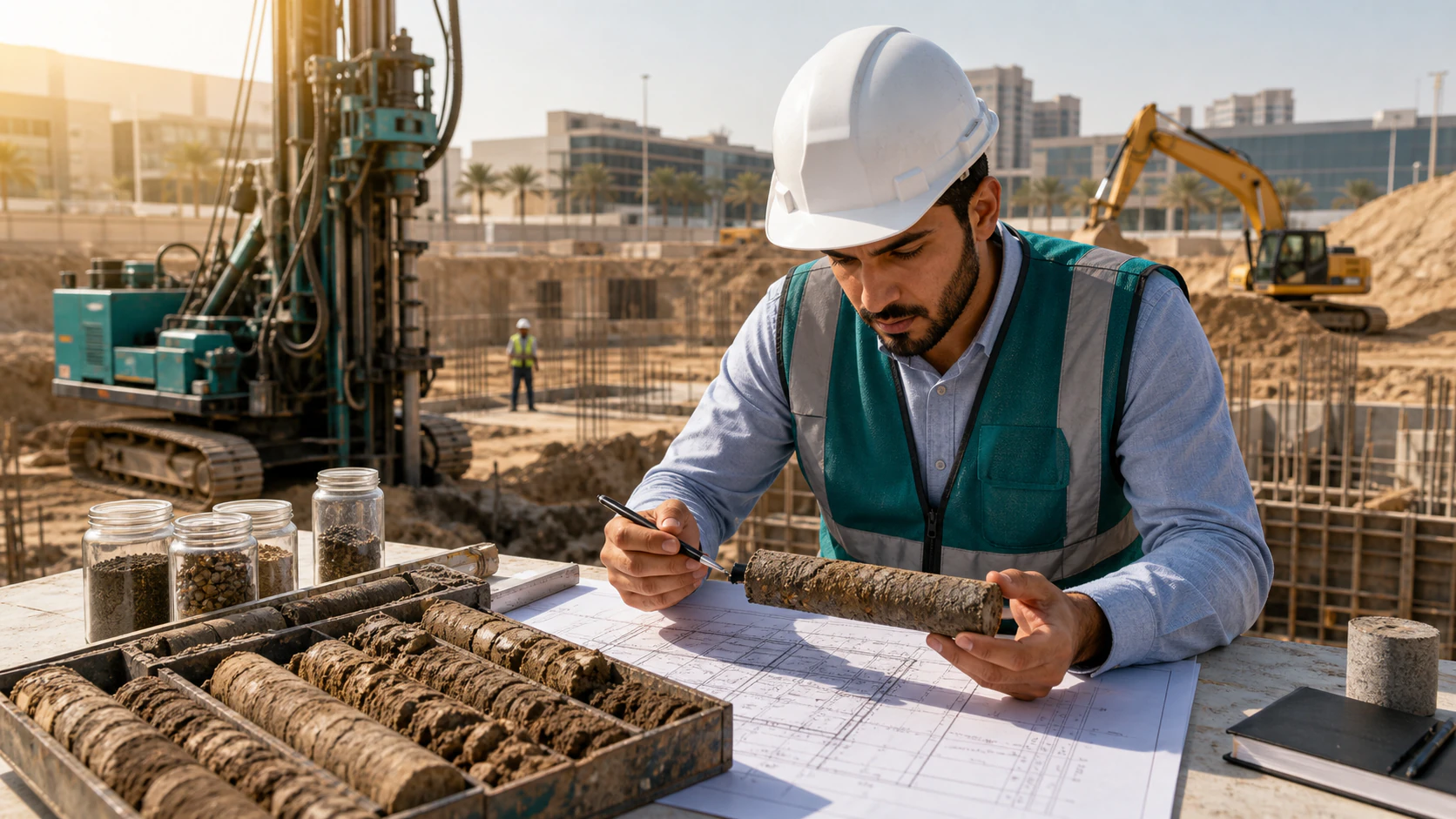
A soil investigation provides information gathered from boreholes, test pits and laboratory testing. Structural engineers use this information to understand both the opportunities and the risks of a site.
- Soil and rock layers, their thickness and their variation across the site.
- Bearing capacity values and recommended allowable pressures for foundations.
- Groundwater levels and any seasonal variation that may affect excavation or durability.
- Indications of problematic soils, such as collapsible, expansive or loose layers.
- Chemical properties that may require special concrete or protection measures.
Linking Soil Risks to Foundation Choices
The analysis translates these findings into foundation decisions. Where competent soil exists at shallow depth, isolated or strip footings may be suitable and economical. Where loads are high or soil conditions vary, a raft foundation can spread loads more evenly and reduce differential settlement. Where weak layers extend deep below the surface, piles may be needed to transfer loads to stronger strata.
Each option has implications for cost, construction time and risk. The aim is not to choose the most robust foundation in every case, but the one that suits the actual soil conditions and building loads with an appropriate margin of safety.
Reducing Settlement and Cracking
Many cracks seen in buildings are linked to foundation movement. Excessive or uneven settlement can distort the structure, crack walls and finishes and damage services. By identifying risks such as variable soil layers, collapsible soils or high groundwater early, the foundation design can include appropriate measures, such as soil improvement, deeper foundations or drainage, to limit movement.
The analysis also informs construction. Requirements for excavation support, dewatering, inspection of foundation levels and verification that actual ground conditions match the report are defined before work begins.
VARIO (Al-Mukhtalef) provides structural design services that start with careful soil risk analysis, helping clients select foundation types that suit site conditions and reduce the risk of settlement and cracking.