Assessing Equipment Vibration Effects on Adjacent Structure
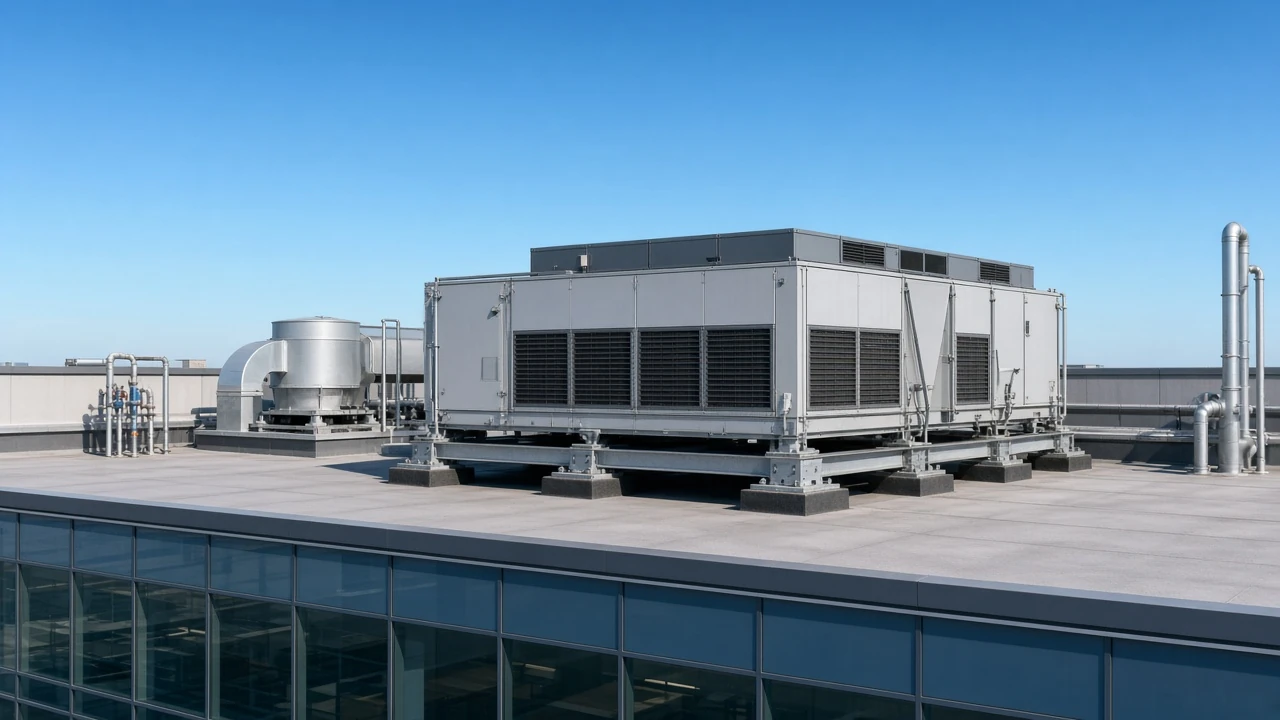
Office buildings rely on a range of mechanical equipment, including chillers, pumps, fans, generators and air handling units. When this equipment runs, it produces vibration that can travel into floor slabs, beams and walls. In many cases the effect is minor, but where equipment is heavy, poorly isolated or located above sensitive spaces, vibration can cause discomfort, noise and, over time, cracking in finishes and structural elements.
How Equipment Vibration Affects the Structure
Rotating and reciprocating machines generate repeated dynamic forces. If the natural frequency of the supporting slab or frame is close to the operating frequency of the equipment, the response can be amplified, a condition engineers describe as resonance. Even without resonance, continuous vibration transmitted through rigid connections can be felt and heard in neighboring offices as structure-borne noise.
A structural assessment therefore looks at both the equipment and its supports.
- The equipment's weight, operating speed and mounting arrangement.
- The stiffness and span of the supporting slab or beams.
- The path the vibration takes into adjacent members, walls and finishes.
- The sensitivity of the spaces nearby, such as meeting rooms and open offices.
Isolation and Strengthening Solutions
Based on the analysis, engineers can recommend measures that reduce transmitted vibration and protect the structure.
- Vibration isolators, such as springs or elastomeric pads, selected to suit the equipment and its operating range.
- Inertia bases or housekeeping pads that add mass and stabilize the equipment.
- Flexible connections on pipes and ducts so vibration is not carried along services.
- Local strengthening or stiffening of slabs and beams where the structural response needs to be reduced.
- Relocation of equipment to more suitable areas where design or refurbishment allows.
Protecting Comfort and Long-Term Performance
Addressing vibration early is more effective than reacting to complaints after occupancy. In new projects, coordination between the structural and MEP teams allows equipment locations and supports to be designed together. In existing buildings, an assessment helps identify the source of problems and the most practical corrective measures.
VARIO (Al-Mukhtalef) provides structural analysis and coordination with MEP design to assess equipment vibration and recommend isolation and strengthening, helping office buildings remain comfortable, quiet and free from avoidable cracking.