Recommendations Improve Visitor Experience in a New Hospitality Building
In hospitality buildings, design is part of the service. Guests form impressions within moments of arriving, and those impressions are shaped by how easy the building is to navigate, how comfortable it feels and how well its spaces support what they came to do. Design recommendations for a new hospitality building therefore focus on the visitor's journey from the entrance onward.
Space Planning and Clear Circulation
A good visitor experience begins with a clear, logical layout. Guests should be able to find reception, lifts, rooms and facilities without confusion, while service activities remain discreet.
- A welcoming arrival area with clear sightlines to reception.
- Logical sequencing of public spaces such as lobbies, lounges and dining areas.
- Separation of guest routes from service and staff circulation.
- Comfortable corridor widths and resting points in longer routes.
- Clear, consistent wayfinding signage.
- Accessible routes for visitors with reduced mobility.
Space allocation should reflect how areas will actually be used, giving generous space where guests gather and efficient layouts where they do not.
Lighting
Lighting strongly influences mood and comfort. Natural light should be used where possible in public spaces, with attention to glare and heat gain. Artificial lighting is typically layered, combining general, task and accent lighting, so that spaces feel welcoming during the day and at night. In guest rooms, simple and intuitive controls improve comfort.
Choosing Finishing Materials
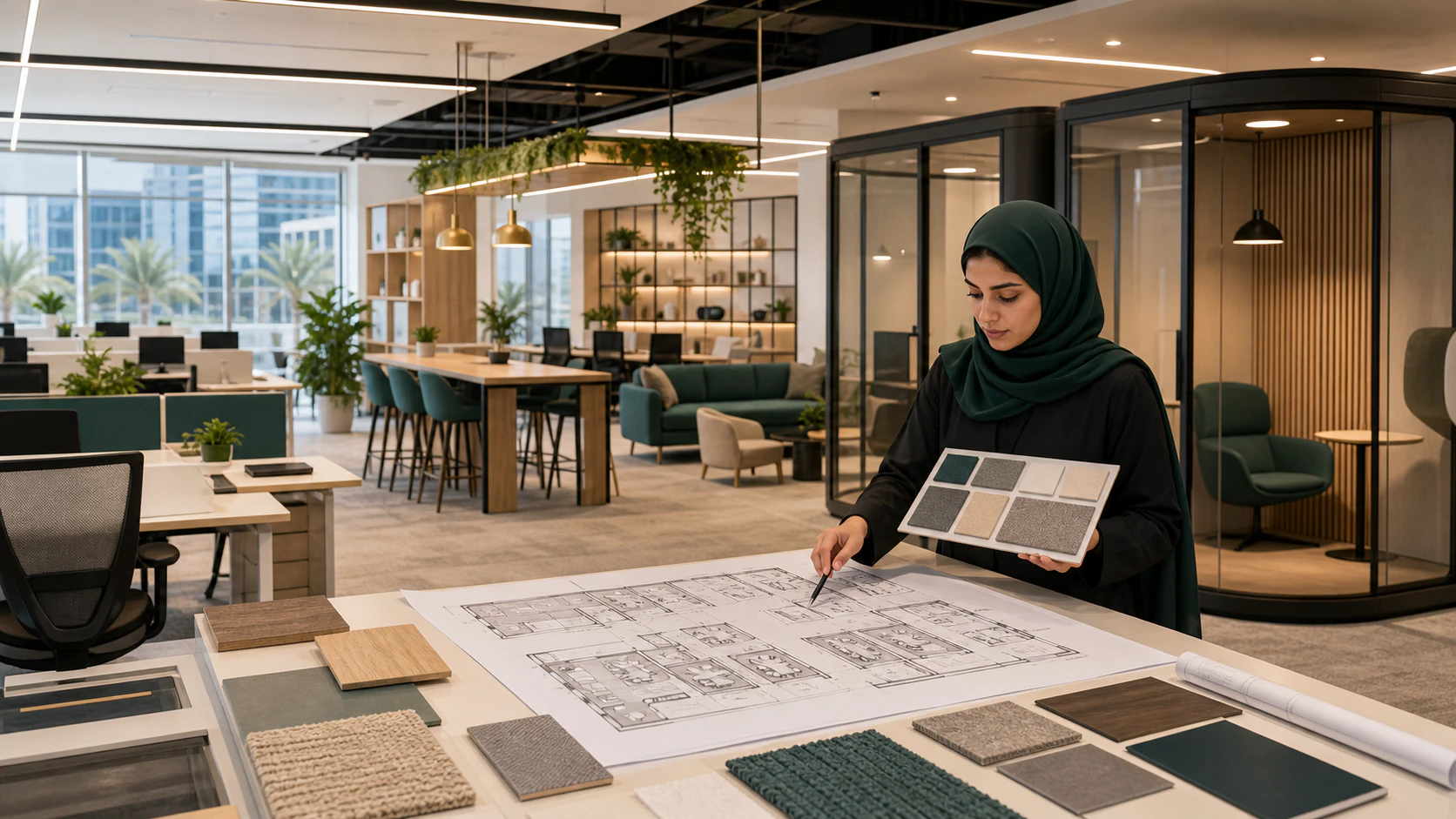
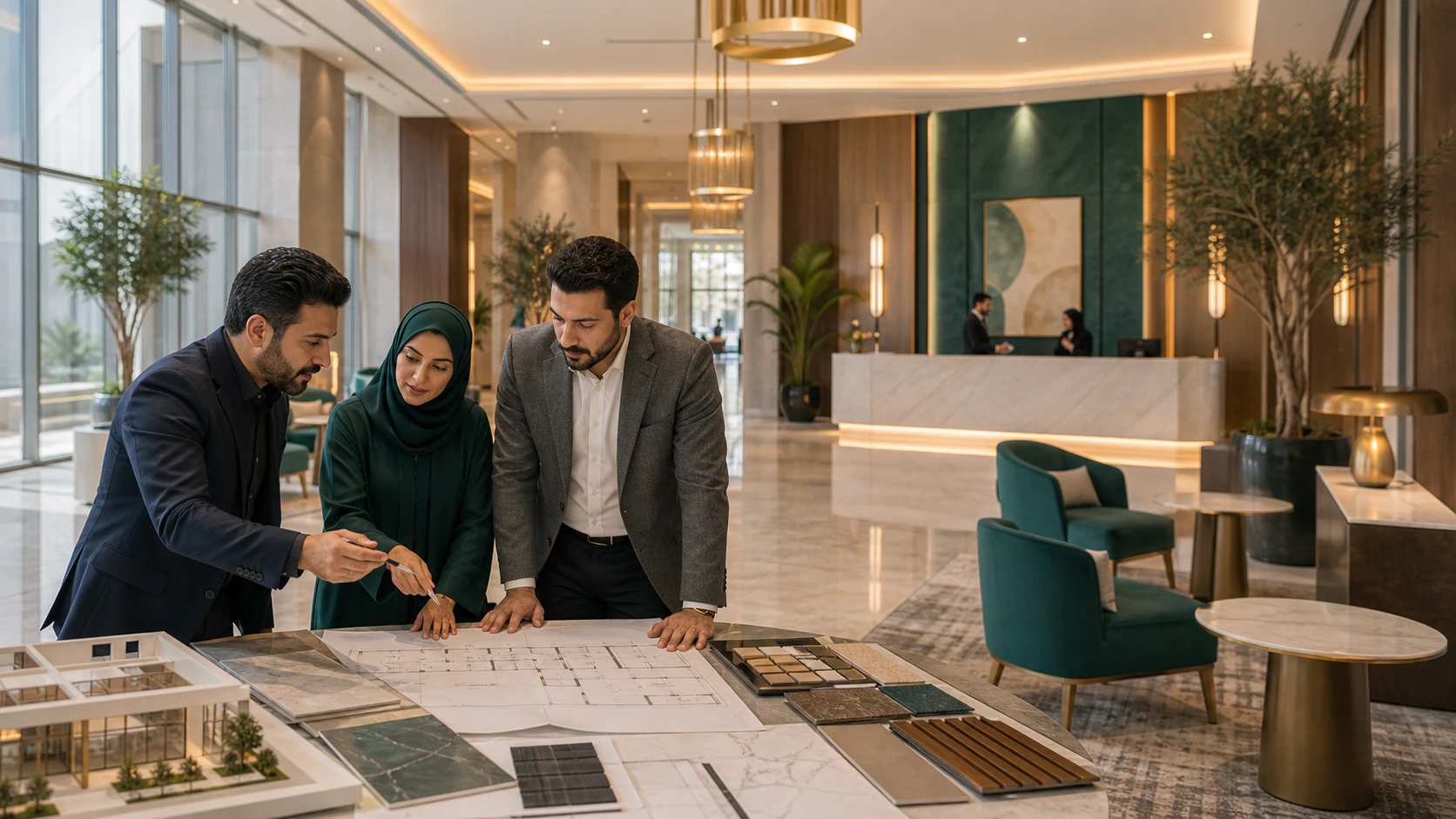
Finishes contribute to both the identity and the practicality of a hospitality building. Materials should express the intended character while withstanding heavy use and frequent cleaning. Durable flooring in high-traffic areas, acoustic treatment to control noise between rooms and public areas, and finishes that are easy to maintain all contribute to a lasting, positive experience.
Consistency of materials and details across spaces creates a coherent identity, while local references in design can give the building a distinctive sense of place.
Coordinating interior design with MEP systems ensures comfortable temperatures, good air quality and quiet operation, aspects guests notice immediately when they are missing.
VARIO (Al-Mukhtalef) provides interior design recommendations to improve visitor experience in new hospitality buildings, focusing on space planning, clear circulation, lighting and the right choice of finishing materials.