Designing Post-Tensioned Slabs for Long Spans in Parking Structures
Why Post-Tensioning Suits Parking Structures
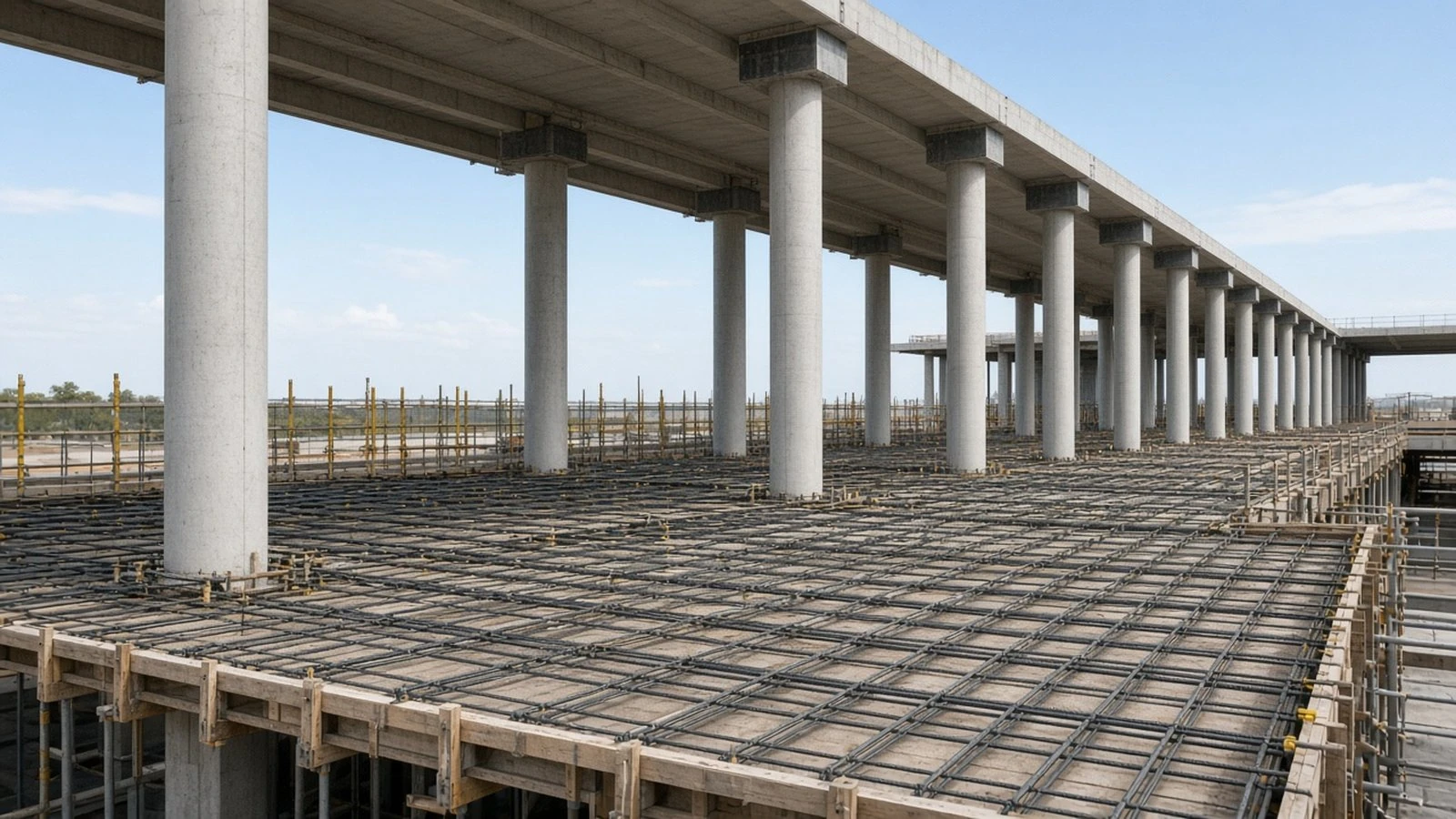
Parking structures need wide, open floors where vehicles can move and park freely without columns getting in the way. Conventional reinforced concrete slabs can span these distances, but usually at the cost of deeper sections, heavier dead loads, or more columns. Post-tensioned slabs use high-strength steel tendons that are stressed after the concrete gains strength, introducing a compressive force that counteracts the effects of gravity loads. The result is a thinner, lighter slab that can span further, which reduces the number of columns, lowers the overall building height for the same number of levels, and improves the flexibility of parking layouts and driving aisles.
Tendon Layout and Analysis
The structural design begins with the column grid and the span lengths that suit the parking layout. Tendon profiles are then set so that their drape balances a chosen portion of the permanent loads, with tendons commonly banded along column lines in one direction and distributed in the other. The analysis checks the slab at transfer, when prestress is applied to young concrete, and in service under full loading.
- Deflection limits to keep floors level, protect drainage falls, and avoid ponding.
- Crack control, which is especially important where slabs are exposed to weather and de-icing or saline contamination.
- Punching shear at columns, where concentrated forces are highest.
- Restraint effects from shortening, which can crack walls and stiff cores if not accommodated.
Detailing and Construction Coordination
A post-tensioned design only performs if it is built as intended. Drawings must clearly define tendon profiles, support chair heights, anchorage zones, and the bursting reinforcement around anchors. Openings for ramps, drainage, and services should be fixed early, since cutting tendons later is difficult and risky. Durability measures, such as adequate concrete cover, suitable concrete quality, and protection of anchorages, are essential in the harsh exposure of open parking decks. On site, supervision verifies tendon placement before the pour, confirms that concrete has reached the required strength before stressing, and records elongations against calculated values. When design, detailing, and site control work together, post-tensioned slabs deliver long spans, slimmer floors, and open, efficient parking spaces.