Designing Building Entrances for Accessible Access
The entrance is the first part of a building that every visitor uses. For people with disabilities, older users and parents with prams, the design of that entrance decides whether they can enter safely and independently or must depend on others. Accessible entrance design is therefore both a regulatory requirement and a basic measure of architectural quality.
Ramps, Levels and Approach Routes
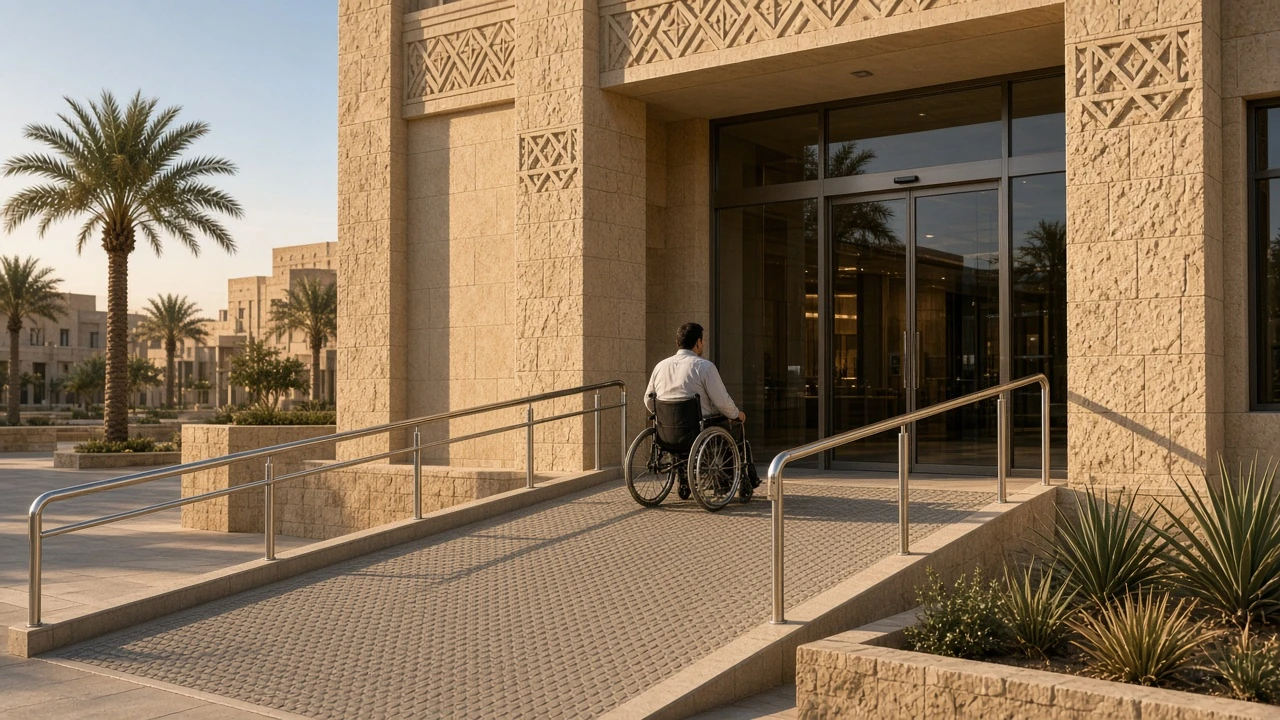
Where there is a level difference between the street or parking area and the entrance, a properly designed ramp is essential. The slope must be gentle enough for wheelchair users to manage, with landings for rest and turning, handrails on both sides where required, and edge protection to prevent wheels slipping off.
- Ramp slopes and lengths that comply with the approved accessibility requirements.
- Level landings at the top, bottom and at intervals along longer ramps.
- Continuous, firm approach routes from parking and drop-off points to the door.
- Tactile and visual cues that help users with visual impairments find the entrance.
Doors and Floor Surfaces
Door width and operation are equally important. Doorways must provide enough clear width for wheelchairs, with thresholds kept flush or minimal. Door hardware should be easy to grip and operate, and automatic doors can greatly improve access at main entrances. Clear space in front of doors allows users to approach and open them comfortably.
Floor surfaces at the entrance should be slip-resistant in both dry and wet conditions. Changes in material should be smooth and level, and entrance matting should be fixed flush to avoid tripping hazards.
Dedicated Parking and Overall Integration
Accessible parking bays located close to the entrance, with adequate width and a safe route to the door, complete the arrival experience. These bays should be clearly marked and connected to the entrance without crossing busy traffic lanes where possible.
Good accessible design is most effective when it is integrated from the concept stage rather than added later. When ramps, doors, surfaces and parking are considered together with the architecture and landscape, entrances become welcoming for everyone, not only compliant.
VARIO (Al-Mukhtalef) incorporates universal access principles into its architectural design work, reviewing entrance details against approved requirements so that buildings offer safe, independent access for people with disabilities.