Daily Tracking Forms for Concrete Pouring Stages
Concrete pouring is one of the most time-sensitive activities on a construction site. Once the trucks arrive, decisions must be made quickly, and mistakes are hard to undo once concrete has set. Daily tracking forms give the supervision and contractor teams a consistent way to check, record and control each pour, from readiness through to placement.
Confirming Readiness Before the Pour
The first section of the form confirms that the element is ready to receive concrete. This links the pour to earlier inspections and avoids starting before everything is in place.
- Approval of reinforcement and formwork inspections.
- Confirmation that embedded items, sleeves and conduits are installed.
- Availability of equipment such as pumps, vibrators and lighting for longer pours.
- Arrangements for curing and protection after placement.
- Confirmation of the approved mix design and supplier.
Testing and Monitoring During the Pour
As concrete arrives, the form records key information for each delivery: truck number, delivery ticket details, time of batching and arrival, and the location where the load is placed. Slump tests check the workability of the concrete against the specified range, and samples for strength testing are taken at the required frequency and labeled for traceability.
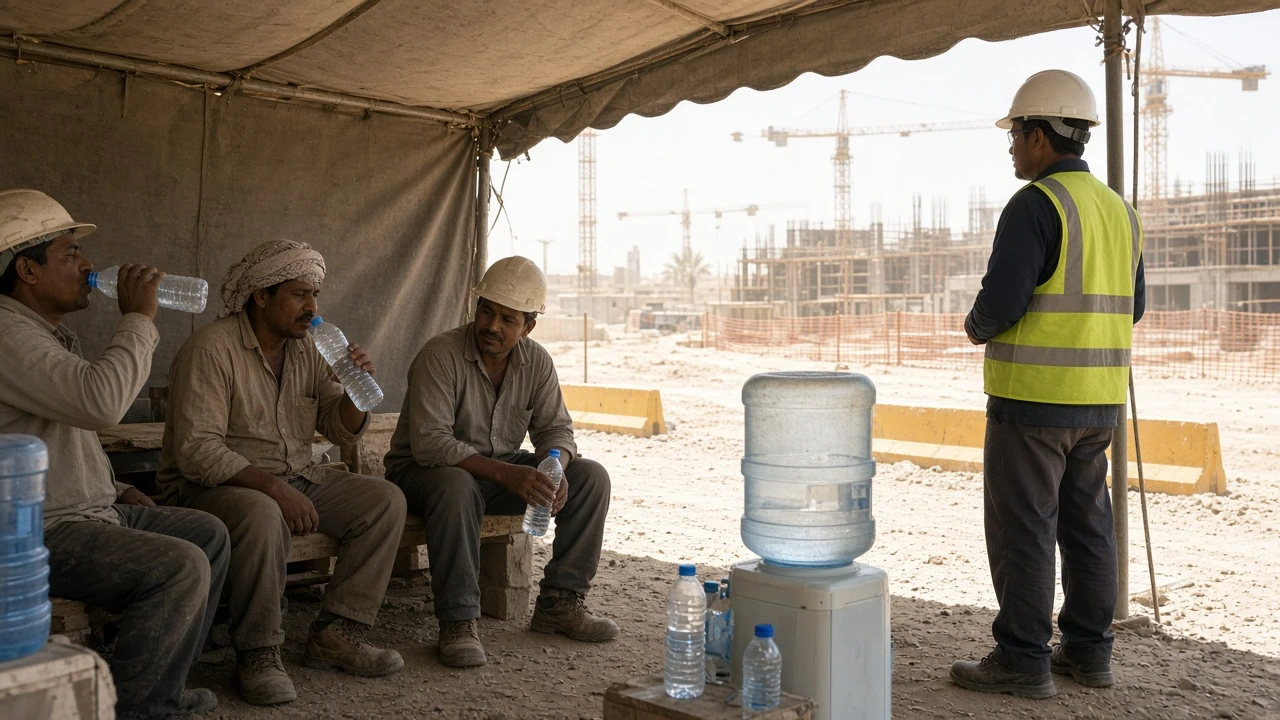
Concrete temperature is particularly important in hot weather. High temperatures can accelerate setting, reduce workability and increase the risk of cracking. Recording concrete and ambient temperatures helps confirm that hot-weather measures, such as scheduling pours at cooler times, are effective and that loads outside acceptable limits are identified.
Handling Technical Observations
Not every pour goes perfectly. The form provides space to record observations, such as delays between trucks, signs of segregation, issues with compaction or formwork movement, along with the actions taken. Observations that require follow-up, such as repairs to honeycombing or review of low test results, are tracked until closed.
Completed forms build a reliable record of how each element was cast. Combined with test results, they support quality assessments, help resolve questions later and form part of the project's quality documentation at handover.
VARIO (Al-Mukhtalef) uses structured daily tracking forms within its quality and supervision services, documenting readiness, slump tests, temperatures and observations for every concrete pour to protect quality and consistency.