New Occupational Safety Plan for High-Density Construction Sites
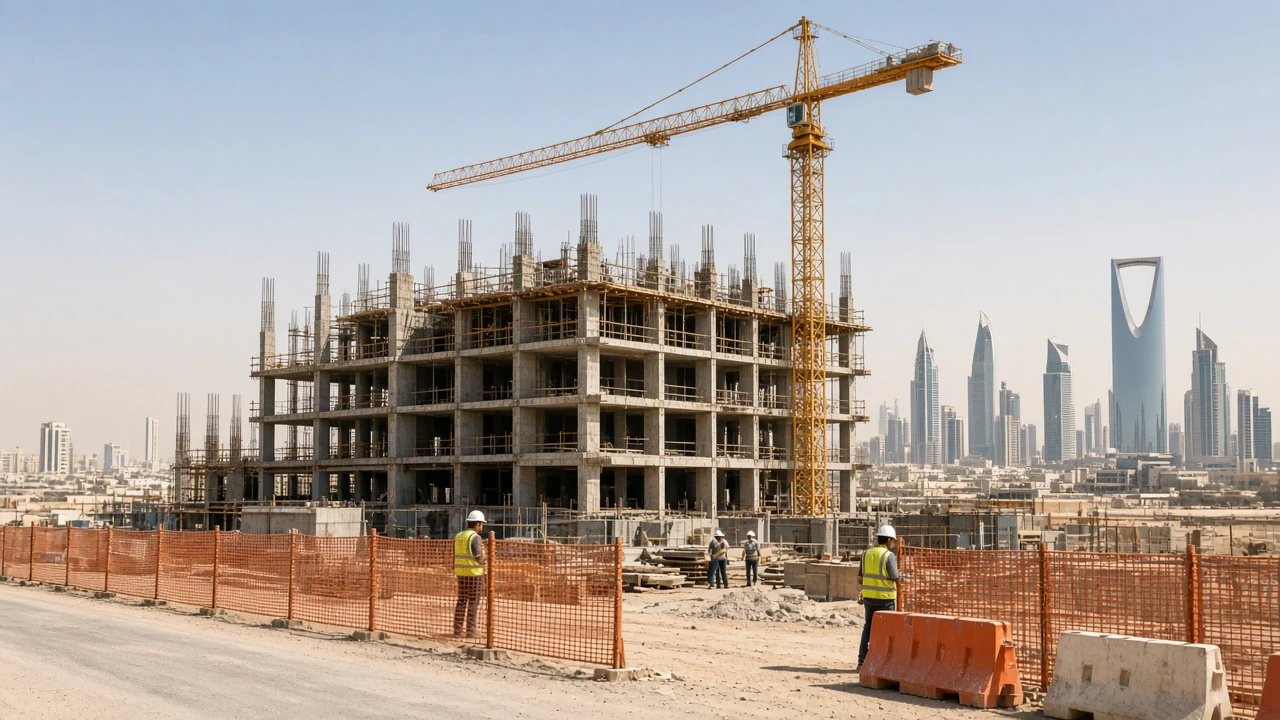
High-density construction sites, where many crews, machines and materials share limited space, present some of the most complex safety challenges in the industry. Multiple trades working at different levels, frequent deliveries and constant movement of people and equipment increase the likelihood of accidents. A dedicated occupational safety plan brings order to this environment.
Managing Risks Systematically
The plan starts with identifying hazards and assessing risks for each major activity. This allows controls to be put in place before work begins rather than after an incident.
- Risk assessments for activities such as excavation, work at height, lifting operations and hot work.
- Method statements describing how high-risk tasks will be carried out safely.
- Permit-to-work systems for activities that require specific authorization.
- Regular review of risks as the site layout and activities change.
Organizing Circulation Paths
On a crowded site, separating people from moving equipment is one of the most effective safety measures. The plan defines pedestrian routes, vehicle routes, loading areas and exclusion zones, and shows how they will be marked and protected. Access to upper floors, stair towers and hoists is planned so that workers can move safely without passing through active work areas or beneath suspended loads.
Good housekeeping supports safe circulation. Keeping walkways clear of materials, debris and cables reduces trips and falls, which remain among the most common site injuries.
Protective Equipment and Daily Observations
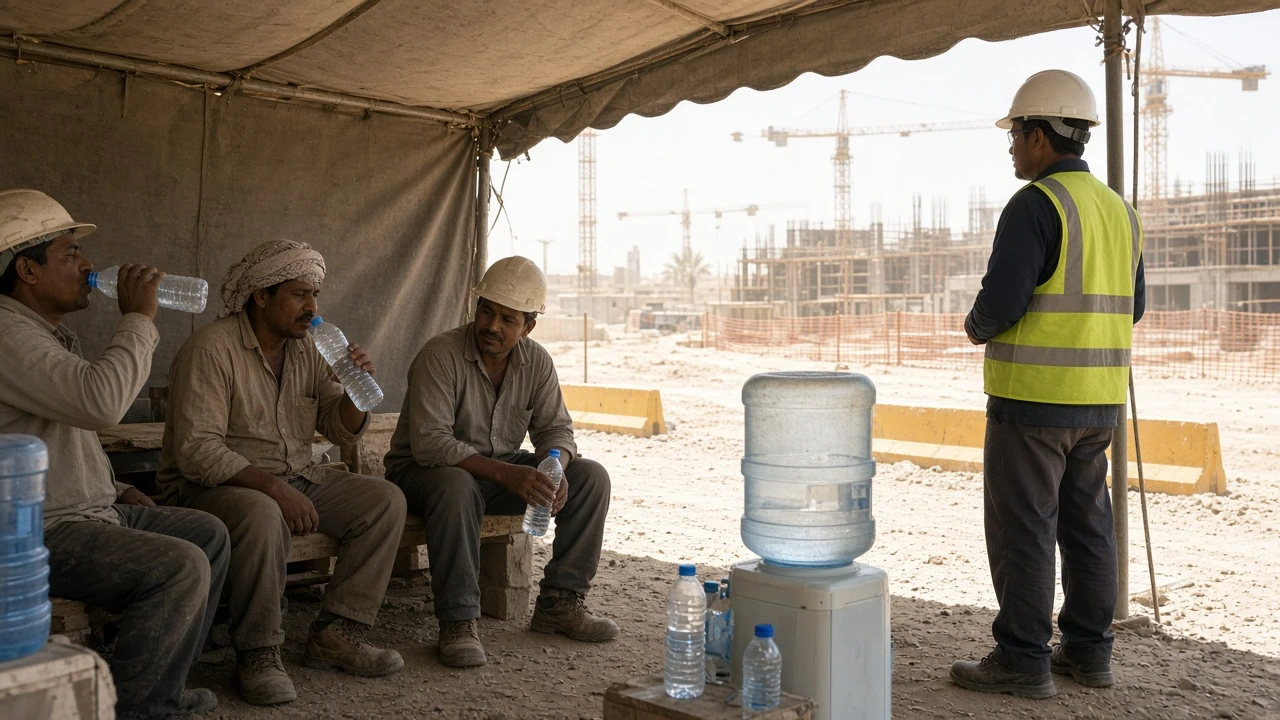
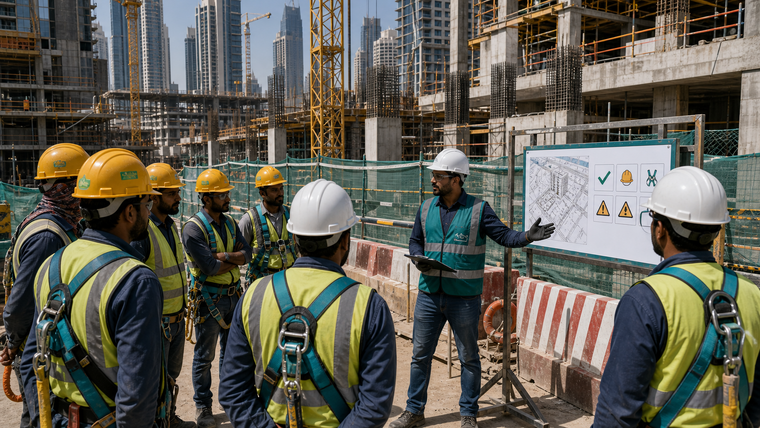
Personal protective equipment is the last line of defense, but it remains essential. The plan specifies the required equipment for each area and activity, such as helmets, safety footwear, high-visibility clothing, eye protection and fall-arrest systems, and sets out how compliance will be checked.
Daily observation documentation turns the plan into a living system. Safety staff and supervisors record unsafe acts and conditions, near misses and corrective actions, and these records are reviewed regularly to identify trends. Toolbox talks and induction sessions use these findings to keep workers informed and engaged.
A well-implemented safety plan protects workers, reduces disruption from incidents and supports the overall quality of the project.
VARIO (Al-Mukhtalef) integrates occupational safety planning into its supervision and quality services, helping high-density construction sites manage risks, organize circulation, enforce protective equipment and document daily observations.