Heat Stress Protection Plan for Site Workers in Summer
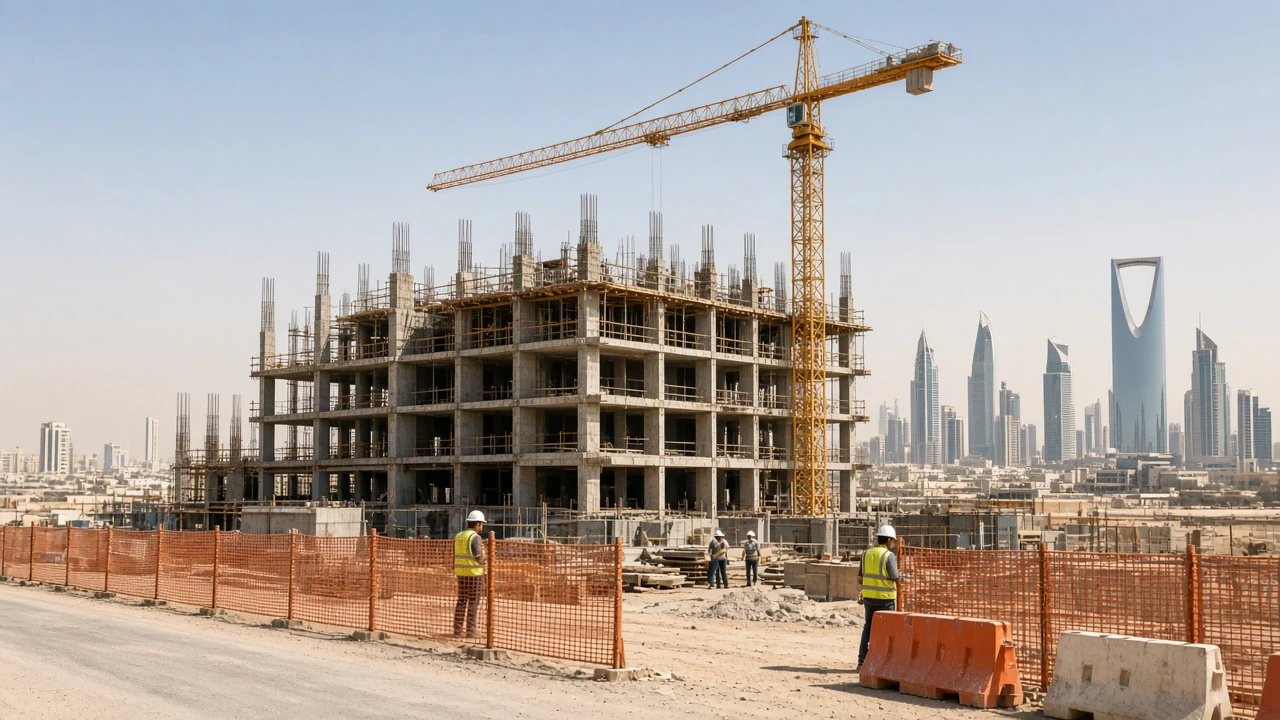
Summer in Saudi Arabia brings some of the most demanding working conditions anywhere in the construction industry. On exposed sites, high temperatures, direct sun and physically heavy tasks combine to place workers at real risk of heat-related illness. A heat stress protection plan turns general awareness into practical, daily measures that keep people safe.
Organizing Working Hours
The most effective control is to reduce exposure during the hottest parts of the day. A heat stress plan schedules heavy outdoor work for cooler hours and limits activity during peak heat, in line with applicable regulations on midday work in summer.
- Shifting strenuous tasks, such as concrete pours and steel fixing, to early morning or later hours where practical.
- Planning work so that crews rotate between sunny and shaded tasks.
- Allowing new or returning workers time to acclimatize gradually to the heat.
Shade, Water and Rest Breaks
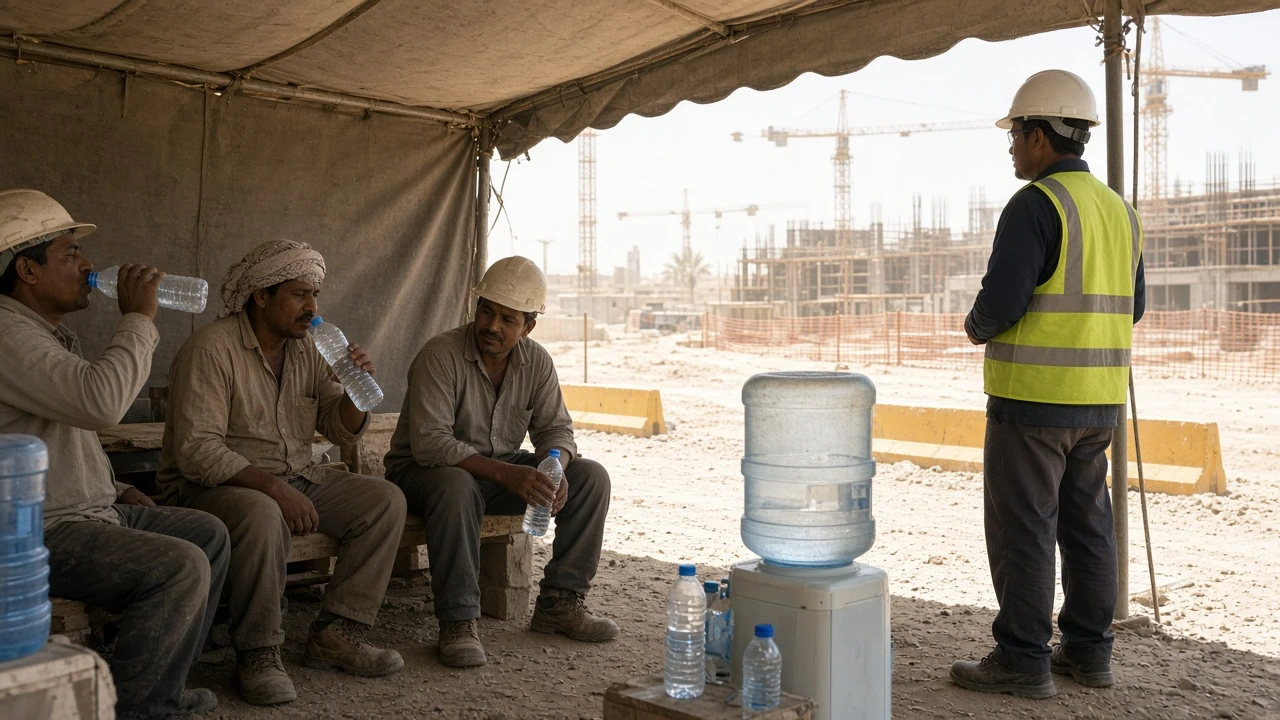
Workers need easy access to shade and cool drinking water throughout the shift. The plan defines where shaded rest areas and water points are located, how they are maintained, and how often breaks should be taken as temperatures rise.
- Shaded rest areas close to work zones, so breaks are not skipped because of distance.
- Sufficient cool drinking water, regularly replenished, with encouragement to drink frequently.
- Scheduled rest breaks that increase in frequency during the hottest periods.
- Suitable clothing and personal protective equipment that balance protection and comfort.
Training Supervisors to Spot Early Symptoms
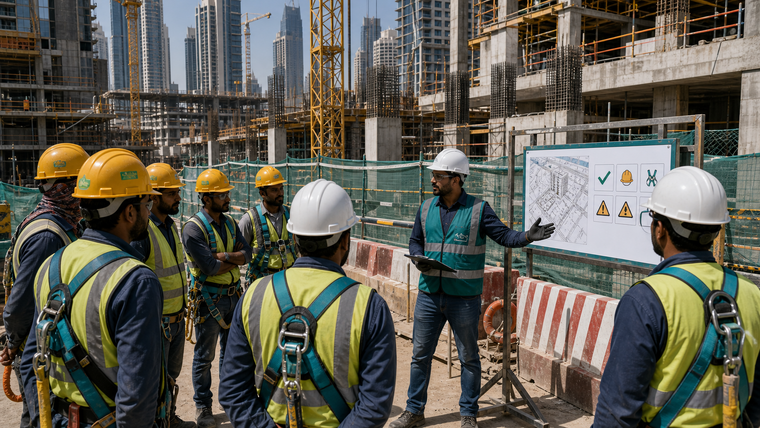
Heat illness can develop quickly, and early signs are not always obvious to the person affected. Supervisors and foremen should be trained to recognize symptoms such as heavy sweating, dizziness, confusion, cramps and unusual fatigue, and to act immediately by moving the worker to shade, providing water and seeking medical help when needed. Clear emergency procedures and first-aid readiness are part of the plan.
A heat stress plan works best when it is reviewed in daily briefings and adjusted according to conditions. Monitoring the weather, recording incidents and near misses, and listening to workers' feedback all help improve the plan over the summer.
VARIO (Al-Mukhtalef) treats worker safety as an integral part of site supervision and quality, supporting contractors and owners in applying heat stress measures that protect workers on exposed sites throughout the summer months.