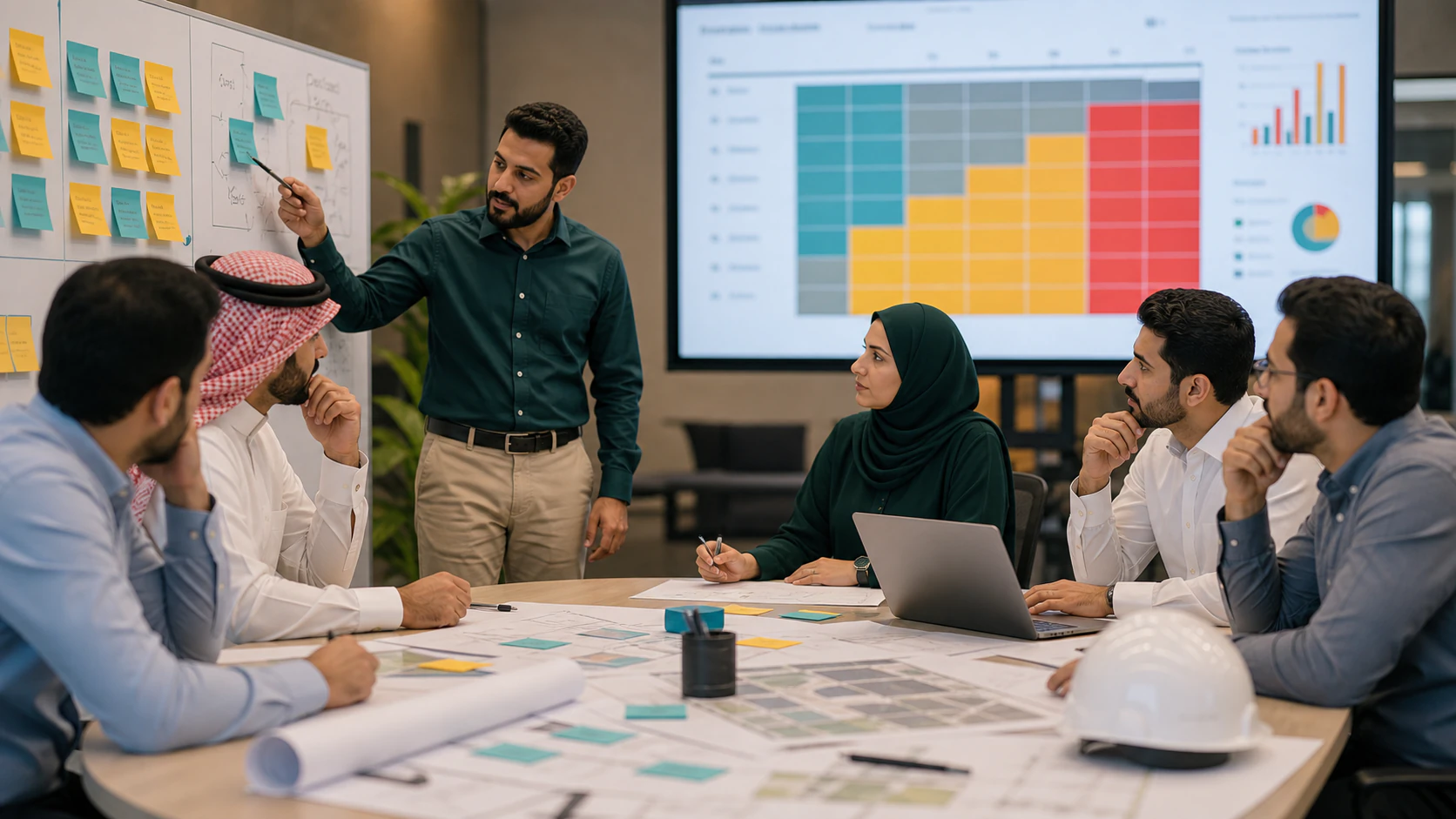
Workshop on Risk Management in Engineering Projects
Every engineering project faces uncertainty. Designs evolve, ground conditions surprise, suppliers are delayed and approvals take longer than expected. Projects that manage these uncertainties systematically are far more likely to finish on time, on budget and safely. Training workshops on risk management help engineers and project teams build the skills to do this consistently.
Identifying Risks
The first topic in a risk management workshop is how to recognize risks before they become problems. Participants learn to look across all aspects of a project rather than focusing only on technical issues.
- Technical risks, such as design errors, unforeseen site conditions or untested construction methods.
- Commercial risks, including cost escalation, contract ambiguities and payment delays.
- Schedule risks, such as long-lead items, approval durations and resource shortages.
- Safety and environmental risks associated with site activities.
- External risks, such as regulatory changes or market conditions.
Practical techniques, including structured brainstorming, checklists drawn from previous projects and reviews of drawings and schedules, help teams build a comprehensive risk register.
Assessing Impact and Likelihood
Not every risk deserves the same attention. Workshops introduce simple methods for assessing each risk by its likelihood and potential impact on cost, time, quality and safety. A risk matrix helps teams prioritize, focusing effort on the risks that matter most. Participants also learn to revisit assessments as the project progresses, since risks change over time.
Preparing Response Plans During Execution
Once risks are understood, teams need clear plans for dealing with them. Common response strategies include avoiding the risk by changing the approach, reducing its likelihood or impact, transferring it through contracts or insurance, or accepting it with a contingency. Each response should have an owner and a timeframe.
During execution, risk management becomes part of the regular project routine. Risk reviews in progress meetings, early warning indicators and clear escalation paths allow teams to respond quickly when conditions change. Lessons learned are captured so that future projects benefit.
Workshops that use realistic case examples and group exercises help participants apply these concepts to their own work.
As part of its training and development activities, VARIO (Al-Mukhtalef) promotes risk management skills across its teams, helping engineers identify risks, assess their impact and plan effective responses throughout project execution.