Supervising Concrete Curing in Hot Weather Conditions
Why Hot Weather Changes the Rules
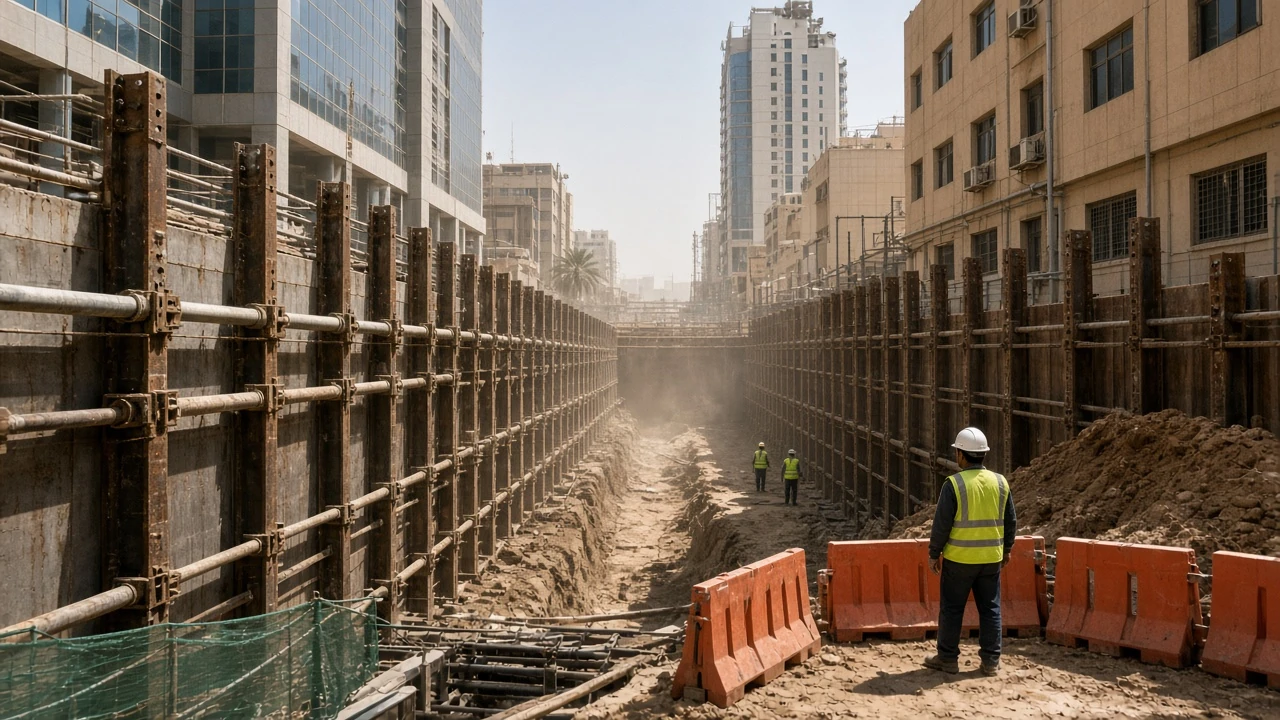
High air temperatures, direct sun, low humidity, and wind all accelerate the loss of moisture from fresh concrete. When surface water evaporates faster than bleed water can replace it, the surface shrinks while still plastic and fine cracks appear within hours of placing. Heat also speeds up setting, shortens the time available for placing and finishing, and can reduce long-term strength if hydration is cut short. In the Saudi climate these conditions are routine for much of the year, so curing cannot be treated as an afterthought. Engineering supervision turns hot-weather precautions into a planned, verifiable part of every pour.
Controls Before and During the Pour
Good curing starts before the truck arrives. The supervising engineer reviews the mix design and the measures used to keep the concrete temperature within the project specification, such as chilled water or ice, shaded aggregates, and suitable admixtures. Pour timing is planned for cooler hours, often early morning or night, and the site team prepares formwork, reinforcement, and subgrade so placing can proceed without delay.
- Checking concrete temperature and workability on delivery and rejecting loads outside the specified limits.
- Dampening the subgrade and formwork to stop them absorbing mix water.
- Using sunshades or windbreaks where exposure is severe.
- Keeping finishing crews and curing materials ready so no surface is left exposed.
Curing, Monitoring and Daily Records
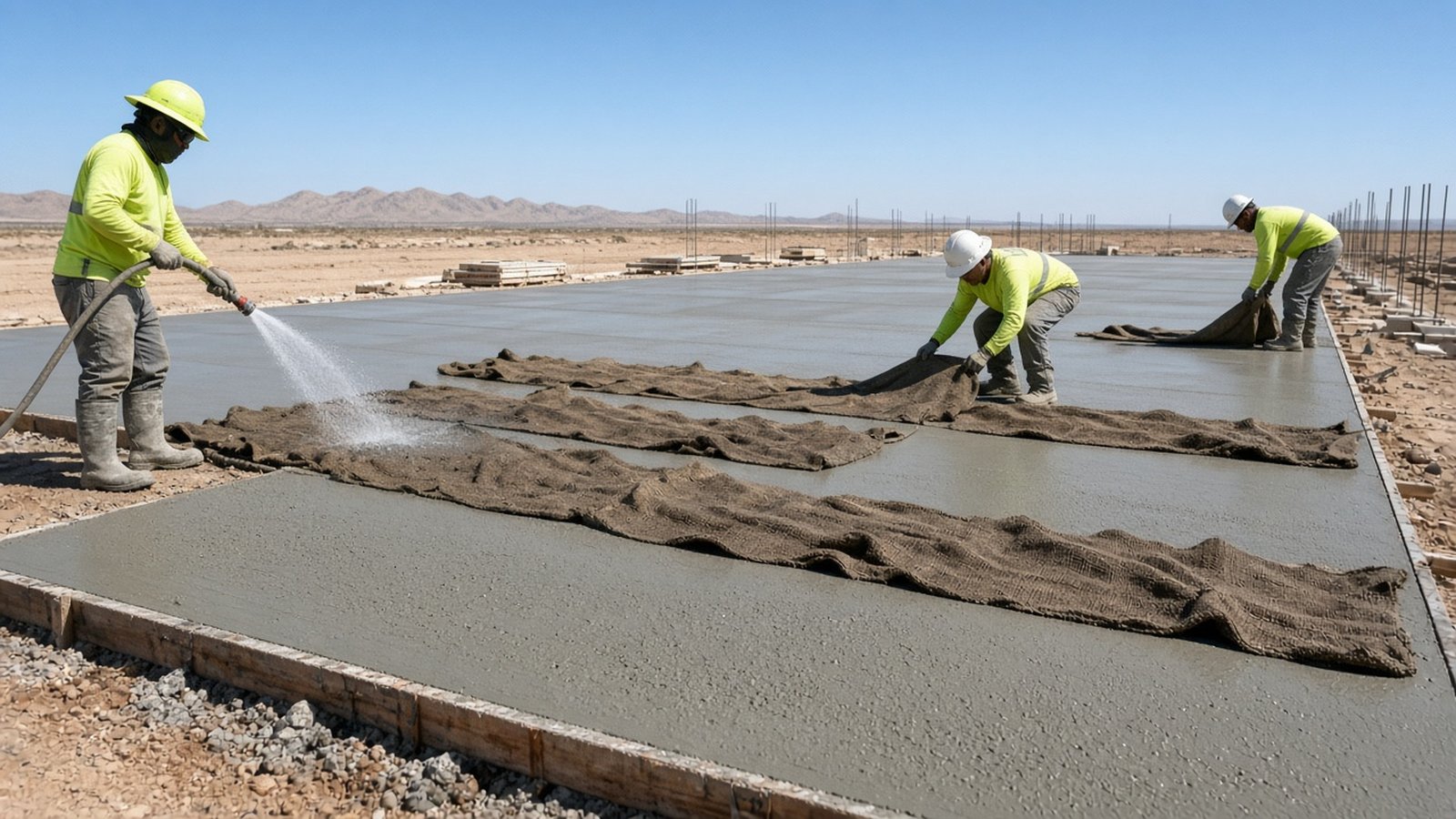
Once finishing is complete, curing must begin immediately and continue for the period stated in the specification. Continuous moist curing with water spraying and wet burlap is common on slabs, while insulated or plastic covers, and curing compounds where approved, help retain moisture on surfaces that are hard to keep wet. The supervisor verifies that coverings stay in place, that surfaces never dry out between wetting cycles, and that formwork is not stripped too early. Every step is recorded daily: pour times, temperatures, curing method, duration, and any observed cracking. These records support quality decisions, help explain test results, and give the owner confidence that the structure will reach its design strength. Consistent supervision is what separates concrete that merely looks finished from concrete that performs over its full service life.