Scheduling Water Tank Cleaning and Disinfection in Buildings
Why Tank Cleaning Needs a Schedule
Ground and roof water storage tanks are essential in many buildings, but they can quietly become a health risk. Sediment settles at the bottom, biofilm forms on walls, and warm temperatures encourage microbial growth, especially when water turnover is low. Because occupants rarely see inside a tank, problems are often noticed only after complaints about taste, odor, or discoloration. A planned cleaning and disinfection schedule replaces this reactive approach with regular, documented care. It also helps building managers meet the health requirements of the relevant authorities and gives residents and tenants confidence in the water they use every day.
Planning Each Cleaning Cycle
An effective schedule sets the frequency of cleaning according to the applicable regulations, the tank type, and the building's use, then plans each cycle in detail so that the water supply is interrupted for as short a time as possible. Occupants should be notified in advance, and where a building has more than one tank or compartment, they can be cleaned in turn to maintain supply.
- Draining the tank and isolating inlet and outlet valves.
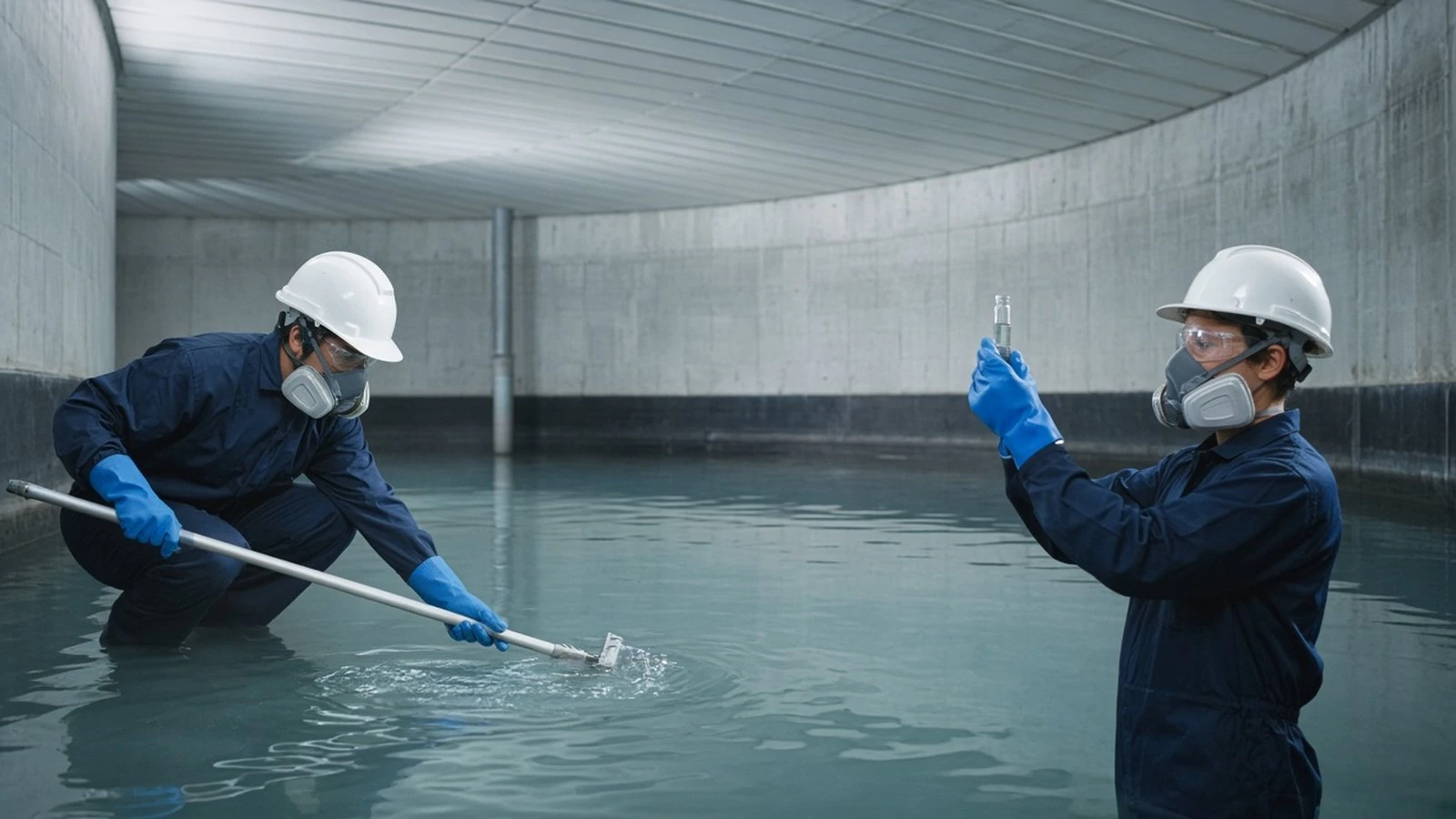
- Removing sediment and scrubbing walls, floor, and ceiling to remove biofilm.
- Inspecting the tank for cracks, damaged coatings, corroded fittings, and the condition of covers, vents, and overflow screens.
- Disinfecting with chlorine at the concentration and contact time required by the procedure, then flushing.
Work inside tanks is confined-space work, so trained technicians, ventilation, protective equipment, and a safe entry procedure are essential.
Sampling, Records and Follow-Up
Once the tank is refilled, water samples are taken and sent to an accredited laboratory to confirm that the water meets drinking water requirements before normal use resumes. Residual chlorine can also be checked on site as an immediate indicator. Each cycle should be recorded with the date, the team involved, the methods and chemicals used, inspection findings, and the laboratory results. These records form a clear history for each tank, make it easy to show compliance during inspections, and highlight recurring issues such as damaged covers or coatings that need repair. Linking the cleaning schedule to the building's wider maintenance plan ensures that defects found during cleaning are fixed promptly, keeping drinking water safe for occupants year round.