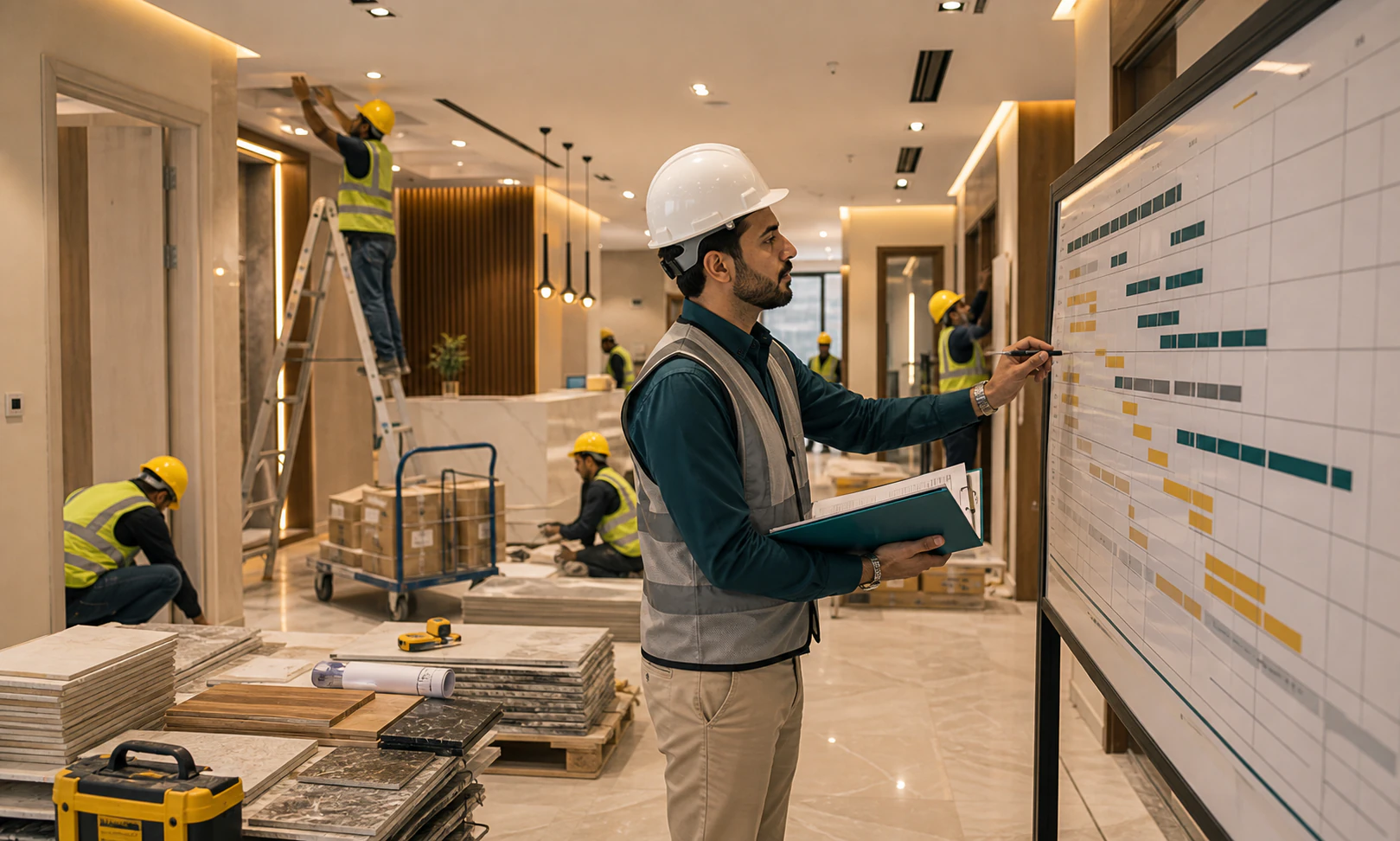
Procurement Plan Prepared for Long-Lead Construction Materials
Some construction materials and equipment cannot simply be ordered when they are needed. Elevators, chillers, switchgear, generators, specialized facade systems, certain finishes and custom-made items can take many weeks or months to design, approve, manufacture and deliver. If procurement for these items starts too late, the whole project can wait for them. A procurement plan for long-lead items addresses this risk from the beginning.
Identifying Long-Lead Items Early
The first step is to identify which items have long lead times on a particular project. This depends on the design, the specification and current market conditions.
- Major MEP equipment, such as elevators, chillers, pumps, transformers and switchgear.
- Facade elements, including curtain wall systems, special glazing and cladding panels.
- Imported or custom-made finishes, fixtures and joinery.
- Structural steel or precast elements where fabrication capacity is limited.
Early engagement with suppliers helps confirm realistic lead times rather than relying on assumptions.
Linking Procurement to the Schedule
A procurement plan works backward from the date each item is needed on site. It includes the time required for design finalization, submittals and approvals, ordering, manufacture, shipping and delivery, with sensible buffers. These activities are then built into the project schedule, so their status is visible alongside construction progress.
- Clear deadlines for design decisions and specification approval.
- Submittal and approval durations agreed with the design team.
- Order dates that allow for manufacturing and delivery periods.
- Delivery windows coordinated with site readiness and storage capacity.
Improving Site Readiness and Reducing Delays
When long-lead items arrive on time, the site can proceed without costly waiting. Equally, the site must be ready to receive them: openings, bases, access routes and lifting arrangements should be prepared in advance. Regular tracking of procurement status, with early warning of potential delays, allows the team to take action, such as expediting, adjusting sequences or considering approved alternatives.
Supply terms, warranties and pre-shipment inspections should also be agreed with suppliers, and materials checked against specifications on arrival. Late design decisions are one of the most common causes of procurement delay, so specifications for long-lead items should be finalized as early as possible.
VARIO (Al-Mukhtalef) prepares procurement plans for long-lead construction materials as part of its project management services, protecting schedules, reducing delays and improving site readiness for execution.