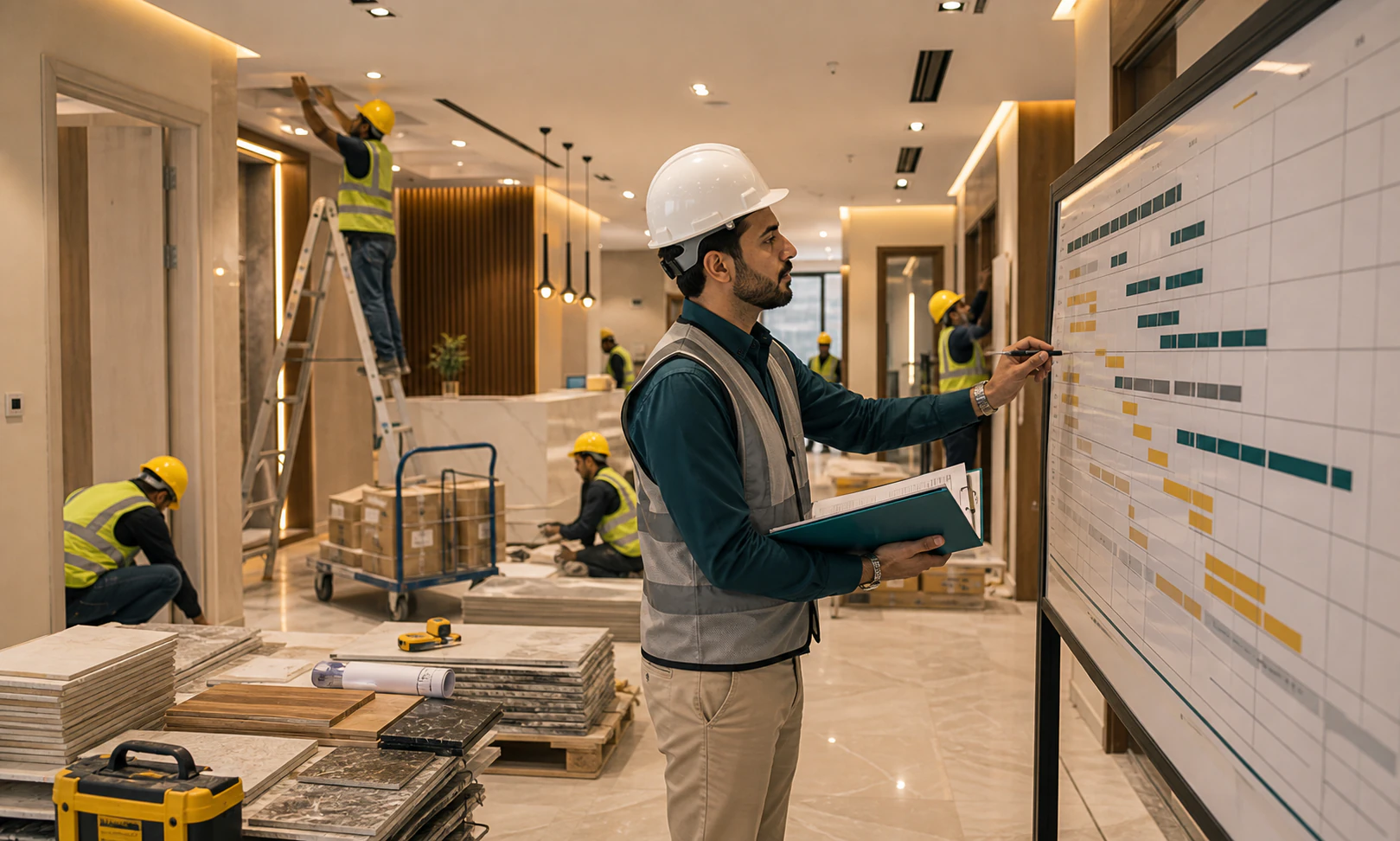
Detailed Schedule for a Fast-Track Finishing Project
Finishing works involve many trades working in the same spaces, often under tight deadlines. In a fast-track project, where time is especially limited, the margin for poor coordination disappears. A detailed schedule becomes the main tool for keeping materials, labor and approvals aligned so that work proceeds continuously and efficiently.
Coordinating Materials and Approvals
Finishing materials frequently require samples, mock-ups and formal approval before ordering. Delays at this stage quickly hold up work on site. A detailed schedule works backward from the date each material is needed on site to determine when it must be submitted, approved and ordered.
- Identifying long-lead items, such as special tiles, joinery, sanitary ware and lighting fixtures.
- Setting deadlines for samples, mock-ups and approvals.
- Tracking orders, deliveries and on-site storage.
- Linking each material to the activities that depend on it.
Labor and Site Execution Sequence
Finishing trades must follow a logical sequence. Work typically moves from rough-in of services and wall preparation through ceilings, flooring and fixtures to final finishes and cleaning. Doing these out of order can lead to damage and rework.
The schedule divides the building into zones, such as floors or units, so that teams can move from one area to the next in a steady flow. This approach keeps trades productive, avoids overcrowding in any single area and makes progress easy to measure. Labor levels for each trade are planned to match the sequence, avoiding both idle crews and bottlenecks.
Monitoring and Recovery
In a fast-track project, progress must be monitored closely, often weekly or even daily. Comparing actual progress with the plan reveals slippage early. Short look-ahead schedules help site teams focus on upcoming work and remove obstacles in advance.
When delays occur, recovery options include adding crews, extending working hours where permitted, resequencing activities or bringing forward material deliveries. These decisions should be made with full awareness of their effect on quality and safety, which must not be compromised for speed.
Clear communication with the owner about progress and pending decisions is equally important, since late changes to finishes are among the biggest threats to fast-track schedules.
VARIO (Al-Mukhtalef) prepares detailed schedules for fast-track finishing projects as part of its project management and finishing works services, coordinating materials, labor, approvals and site sequence to deliver on time.