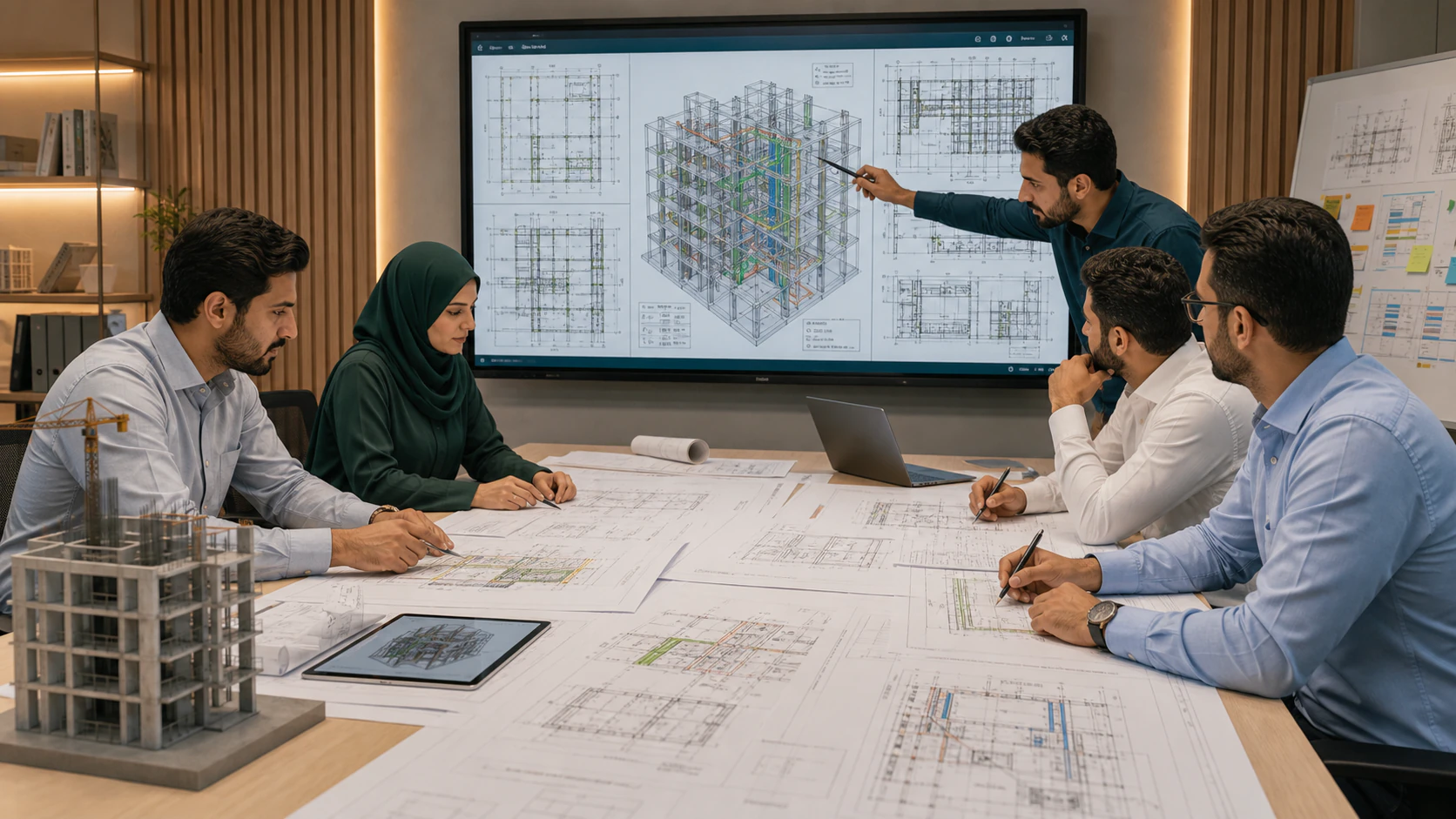
Execution Drawing Standards Unified Across Design Teams
A set of execution drawings is often produced by several teams working in parallel: architects, structural engineers and MEP designers, sometimes in different offices. If each team follows its own conventions for layers, symbols, numbering and presentation, the result is a drawing package that is harder to read, harder to coordinate and more prone to errors on site. Unified drawing standards address this by giving every team a common language.
What Unified Standards Cover
Drawing standards define how information is prepared and presented across all disciplines.
- Sheet sizes, title blocks, scales and numbering systems shared by all disciplines.
- Consistent grids, levels and reference points so that drawings overlay correctly.
- Standard symbols, line types, hatching and abbreviations with a common legend.
- Layer or model organization that allows drawings to be combined for coordination.
- Revision conventions, including how changes are marked and recorded.
Easier Coordination Between Disciplines
When architectural, structural and MEP drawings share the same grids, levels and conventions, they can be overlaid and compared quickly. Clashes between ducts and beams, openings that do not match, or services that conflict with ceiling heights become easier to spot. Where teams use BIM, unified standards for modeling, naming and levels of detail allow models to be federated and checked efficiently.
Standards also improve communication within the design team. Reviewers can move between disciplines without having to learn new conventions, and coordination meetings can focus on solving problems rather than interpreting drawings.
Reducing Errors on Site
For contractors, consistency means clarity. A site engineer who understands the symbols and numbering used on one set of drawings can read the others with confidence. Fewer misunderstandings mean fewer requests for information, less rework and better quality.
Unified standards also support document control. Consistent numbering and revision practices make it easier to confirm that the latest drawings are in use and that superseded versions are withdrawn.
Implementing standards requires an agreed manual, templates and training, and regular checks to ensure compliance. Once established, they become part of the organization's way of working and benefit every project.
VARIO (Al-Mukhtalef) applies unified execution drawing standards across its design teams, easing coordination between architecture, structure and MEP and reducing errors during construction.