Building an Asset Register to Manage Facility Maintenance Efficiently
Why Every Building Needs an Asset Register
A completed building contains hundreds or even thousands of maintainable assets: chillers, air handling units, pumps, fans, electrical panels, generators, elevators, fire protection equipment, and much more. Without an organized record of these assets, maintenance teams rely on memory and scattered documents, preventive tasks get missed, and failures are handled reactively at higher cost. An asset register is the foundation of professional facility management. It tells the operations team what equipment exists, where it is, what condition it is in, and what it needs, turning maintenance from a series of emergencies into a planned activity.
What the Register Should Contain
The register is most effective when it is built during construction and handover rather than reconstructed years later. The contractor and consultant can collect most of the required data from approved submittals, operation and maintenance manuals, and commissioning records. For each asset, the register typically records:
- A unique asset code following a consistent scheme that reflects the building, floor, system, and equipment type.
- Location, manufacturer, model, serial number, capacity, and the system or area it serves.
- Installation and commissioning dates, warranty periods, and the responsible supplier or contractor.
- Recommended preventive maintenance tasks and their frequencies, along with critical spare parts.
- Criticality ranking, so equipment that affects safety or core operations receives priority attention.
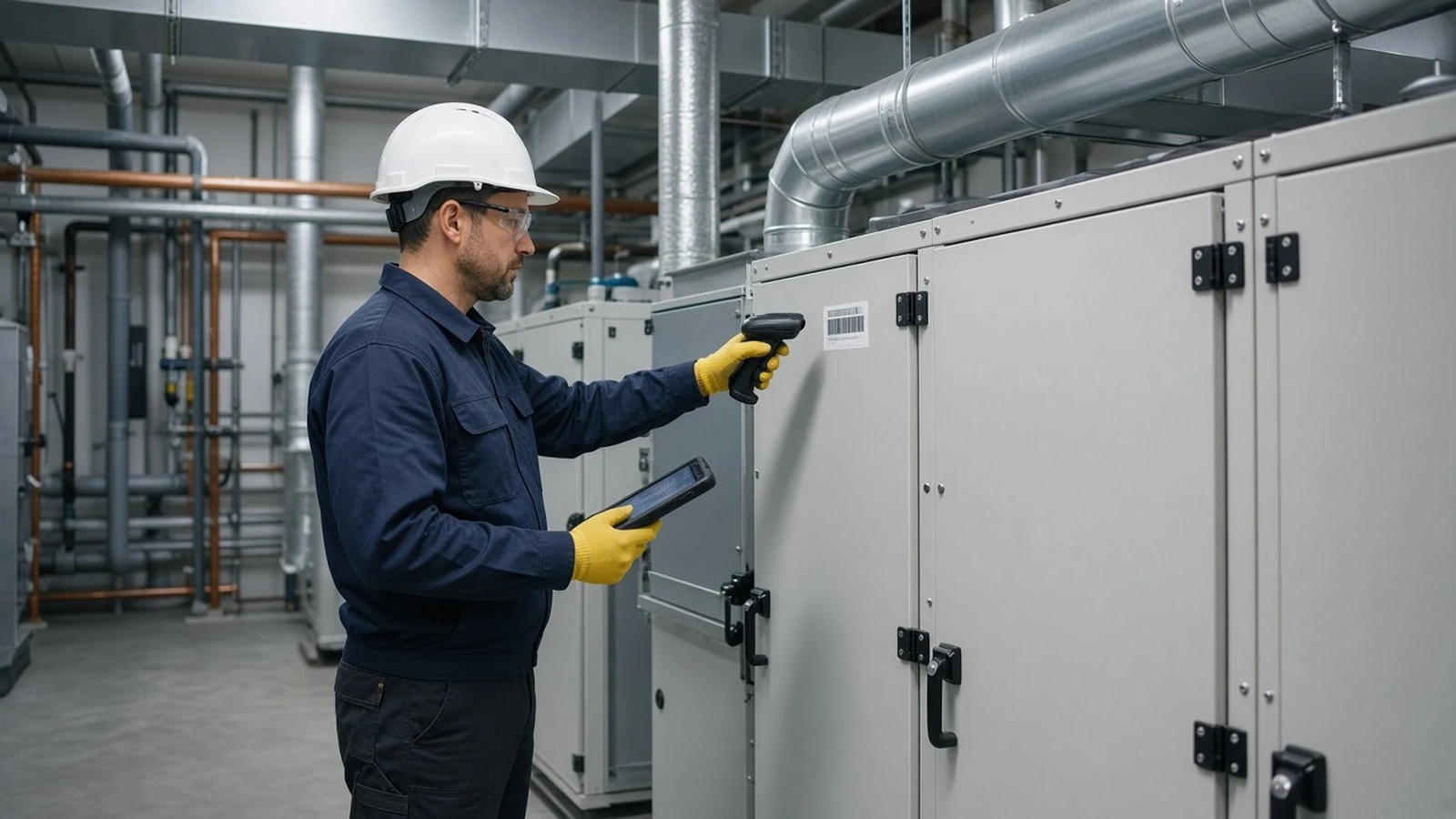
Physical tags or barcodes on the equipment, matching the codes in the register, allow technicians to identify assets quickly and retrieve their history on site using a tablet or phone.
Turning Data into Better Maintenance Decisions
Once the register is in place, it is linked to a maintenance management system, where each asset generates preventive work orders on schedule and corrective work orders are logged against it whenever a fault occurs. Over time, this builds a detailed maintenance history: repair frequency, downtime, spare parts used, and costs. Analyzing that history helps the operations team identify problem equipment, adjust maintenance frequencies, and decide when repair is no longer economical compared with replacement. Recording the expected service life of each asset also supports long-term budgeting, allowing owners to forecast major replacements years in advance rather than facing sudden capital expenses. Warranty dates in the register make sure defects are claimed from contractors before warranties expire. The register must be kept up to date, with new, relocated, or replaced equipment recorded promptly and periodic audits confirming that the data matches reality. Maintained this way, the asset register becomes one of the most valuable documents a building owner holds, improving reliability, extending equipment life, and controlling operating costs throughout the building's life.